The coffee comes out before anyone asks. That’s the first thing regulars notice at Gelmini’s Bakery & Café on Hope Street — a small, cream-colored storefront that has been feeding the Italian-American families of the Cove neighborhood since 1987. Owner Marco Gelmini, who took over from his father about fifteen years ago, has the kind of muscle memory behind the counter that makes the whole operation look effortless.
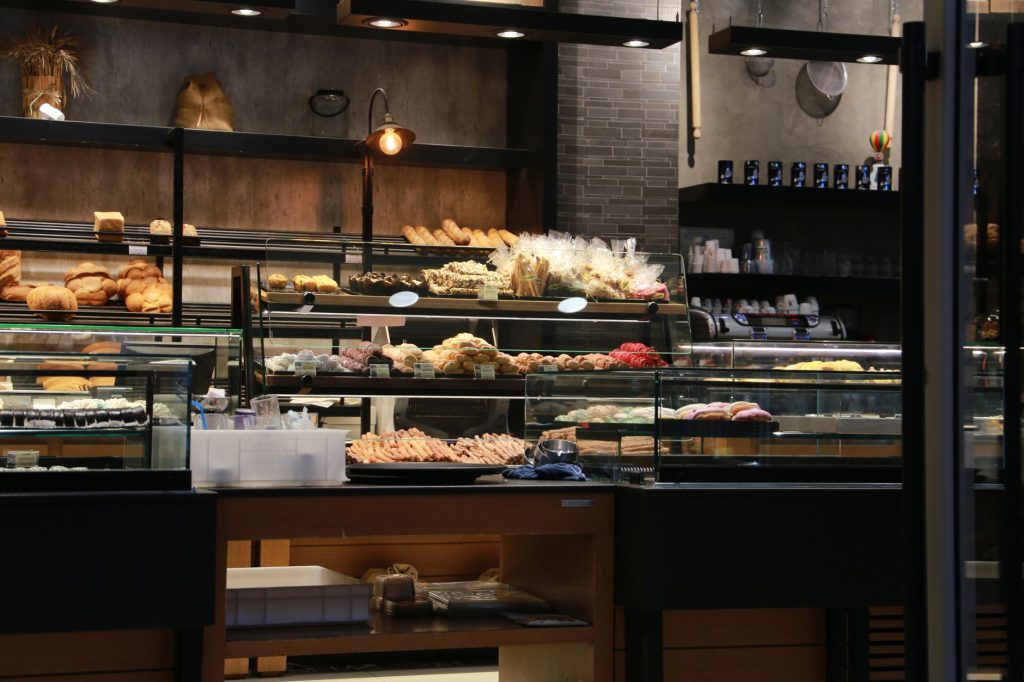
The place is compact. Eight tables, a glass case that runs nearly the full length of the room, and a pressed-tin ceiling that nobody has gotten around to painting over. The display case is the main event: sfogliatelle with shells that shatter cleanly, cannoli filled to order so the shell doesn’t soften, lobster tails the size of a man’s fist, and a rotating roster of seasonal pastries that shows up without announcement. When the fig-and-walnut crostate appears in October, word moves fast through the neighborhood.
Gelmini’s is not primarily a café in the modern sense — there’s no cold brew on nitro, no oat milk variants, no communal worktables. What it has is espresso pulled from a machine old enough to have its own mythology, and a drip coffee that is strong and straightforward and comes in a ceramic mug that has been through the dishwasher thousands of times. Locals drink it at the counter. They talk to Marco. They leave.
The savory side of the case deserves attention. A daily selection of stuffed focaccia, arancini, and a rice ball or two usually makes an appearance by 8 a.m. and tends to be gone before noon. The mozzarella in carrozza — fried, firm, slightly salty — is the kind of thing that has no business being as good as it is at eleven in the morning, but there it is. Lunch draws workers from the surrounding blocks, and the sandwich board on the sidewalk changes depending on what Marco’s been baking since four.
The neighborhood itself matters here. Hope Street sits in a part of Stamford that doesn’t get much attention from the downtown crowd. It’s quieter, more residential, and the foot traffic at Gelmini’s reflects that: old men with newspapers, parents with strollers, the occasional contractor grabbing two bags of pastry for a job site. The rhythms are unhurried, which makes the experience feel less like a café visit and more like dropping in on someone’s kitchen.
Prices are what they should be. A cannolo is three and a half dollars. An espresso is under two-fifty. The sfogliatelle, which takes real skill to make properly, runs four dollars. Nobody is getting rich on these margins, which is perhaps why the quality stays honest.
The weekend line is real, especially in the hour before Sunday mass at the nearby parish. Show up then if the scene is what you’re after. Show up on a Tuesday morning if a quiet table and a good pastry is the actual goal. Either way, there’s no performance happening here — just a family bakery doing the same things it has always done, for the same people it has always served, in the same building it has occupied for nearly four decades.