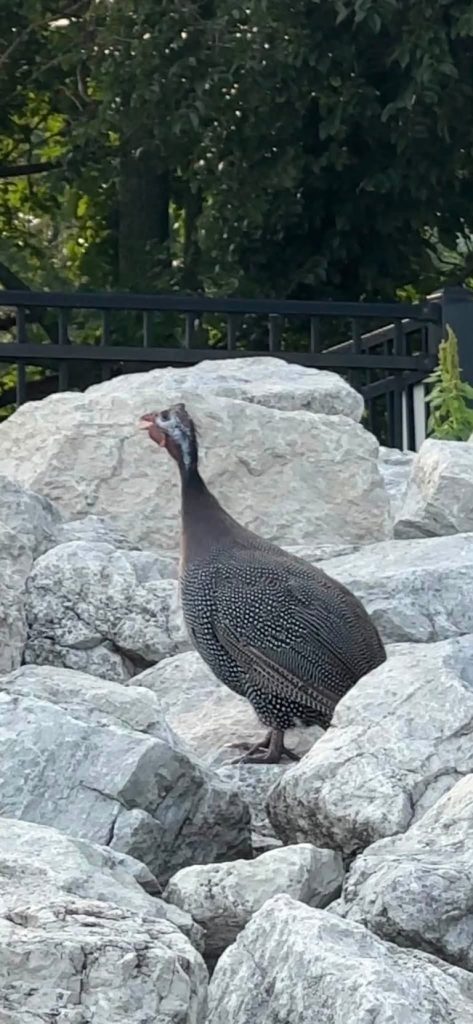
While strolling along Howard Beach in Rogers Park on Tuesday night, Astaire Woldemichael‑Smith and friends heard a loud, unfamiliar clucking. The group, accompanied by their children, followed the sound, initially expecting a wild turkey, but soon realized they had encountered something different.
Using an iPhone’s animal‑identification feature, they identified the bird as a “helmeted guinea fowl.” The discovery sparked curiosity on the neighborhood’s Facebook page, and the report quickly reached the Chicago Bird Alliance and the Chicago Bird Collision Monitors, a volunteer group of roughly 400 members that rescues injured or misplaced birds.
What experts say
Annette Prince, director of the Chicago Bird Collision Monitors and a member of the Chicago Bird Alliance, confirmed the sighting. “It’s definitely not a rare bird that flew in from Africa,” Prince explained. “It is likely a domestic stock that somebody had—either in a market being sold or someone kept it with their other poultry in a yard.”
Guinea fowl are native to Africa but are often raised in the United States as backyard poultry. They are valued by chicken owners as “guard birds” because of their size, aggressiveness, and protective instincts. However, they are fast, clever, and strong, making them difficult to recapture once they escape.
How to help if you see the bird
Prince urges anyone who spots the guinea fowl to call the Chicago Bird Collision Monitors at (773) 988‑1867 so volunteers can attempt a rescue. If you feel comfortable, try guiding the bird into an enclosed space such as a garage or alcove rather than chasing it. “You certainly won’t outrun it,” she noted, adding that placing food or seeds can keep the bird occupied until help arrives.
Once captured, the group will reach out to the community to determine ownership. If no owner comes forward, they will contact local farmers who might be able to provide a permanent home.
Why these birds matter
Guinea fowl are not native to Illinois and can struggle to survive on their own. Prince cautions owners to consider the long‑term responsibilities of keeping such birds, noting that they become louder as they mature and can be a challenge for neighbors.
“These birds are not part of Illinois’ native wildlife, and living on their own independently can be a struggle for them,” Prince said. She hopes the incident encourages responsible pet ownership and prevents future releases.
Original reporting: Block Club Chicago — read the source article.