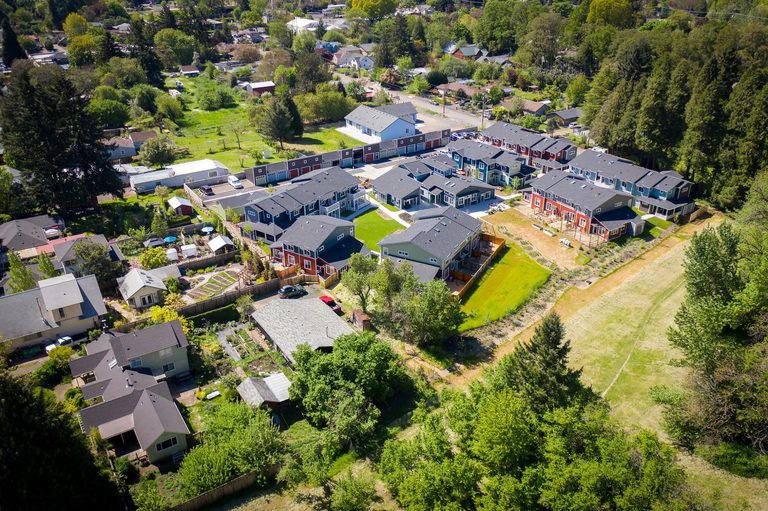
River Song Cohousing, a longtime infill community on River Road in Eugene, has written to the Lookout Editorial Board to endorse the newspaper’s recent housing series and to press city officials for faster, more affordable housing development.
Human cost of delayed housing
The residents describe a decade‑long saga of appeals, legal wrangling and opposition from neighbors they label “NIMBY crusaders,” including local activist Paul Conte. Those delays forced original founders and later families to abandon the project, leaving many without homes they could afford. Children grew up without stable housing, and families faced mounting expenses as the project stalled.
Success despite obstacles
Despite the setbacks, the community was eventually built thanks to the perseverance of the original Oakleigh Meadow members and the 28 families who later joined. The residents argue that the process should not have been so arduous and that similar delays are now threatening new multifamily projects across Eugene.
Benefits of cohousing and multifamily design
River Song Cohousing highlights several practical advantages of its model: most households own a single car and share rides, bicycles and public transit; common outdoor spaces replace large private yards; and families share resources such as gardening tools, laundry facilities and meals three times a week. The community also participates actively in local organizations, including the River Road Community Organization, the annual River Celebration and the Volunteer Library on Oakleigh.
Calls for policy change
The members assert that single‑family housing is no longer sustainable for most families’ wallets or for the environment. They argue that thoughtfully designed multifamily housing within Eugene’s urban boundaries is essential and that the “not in my backyard” mindset must end. Delaying infill and higher‑density development, they warn, will only raise housing costs and exacerbate the city’s housing crisis.
Local impacts and trade‑offs
Construction of the cohousing project did bring temporary disruptions: the River Road was widened, traffic increased, some trees were removed and a year of construction noise and heavy vehicles affected neighbors. Nonetheless, the residents view these short‑term impacts as outweighed by the long‑term benefits of a vibrant, connected neighborhood.
Why the city should act now
According to the letter, the hidden costs of homelessness and substandard housing already burden Eugene taxpayers. By removing procedural barriers and encouraging multifamily projects, the city can reduce those hidden expenses, provide more affordable homes and strengthen community ties.
River Song Cohousing’s appeal aligns with the Lookout series’ call for reform and underscores the need for city leaders to prioritize affordable, high‑density housing as a cornerstone of a resilient, family‑friendly Eugene.
Original reporting: Homepage – Lookout Eugene-Springfield — read the source article.