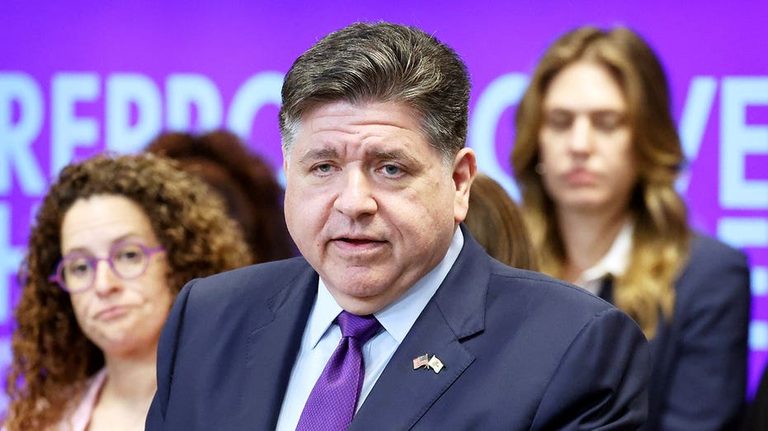
Illinois Governor JB Pritzker announced Tuesday that the state will not participate in the Trump administration’s Federal Scholarship Tax Credit program. The decision means Illinois students will be ineligible for federally funded scholarships that can be used at private schools, a move that has ignited sharp criticism from school‑choice supporters and parents across the state.
Trump administration defends the tax credit
The White House praised the program as a “critical tool” for expanding educational options without draining state budgets. In a statement posted to X, the U.S. Department of Education emphasized that the tax credit “provides millions of dollars of additional support for families seeking quality education, while leaving public‑school funding untouched.” Department officials highlighted that the credit has already helped families in participating states cover tuition, transportation and other costs associated with private‑school enrollment.
Conservative groups rally against the opt‑out
Prominent education advocates quickly condemned Pritzker’s move. American Federation for Children CEO Tommy Schultz called the decision “remarkably tone‑deaf” and warned that 1.9 million Illinois K‑12 students could lose access to life‑changing resources. “The Education Freedom Tax Credit could have unlocked needed resources for families and students, but Governor Pritzker chose to let those resources go to other states,” Schultz said.
Jane McEnaney, executive director of Schools for America, added on X, “Imagine being Governor of Illinois and hating Donald Trump more than you care about the educational opportunities of 1.9 million kids.” The comment reflects a broader sentiment among school‑choice supporters that the tax credit aligns with parental‑rights principles and the Constitution’s guarantee of liberty to choose an education that reflects family values.
Governor Pritzker’s rationale
In his press release, Governor Pritzker argued that the program, which he labeled a “school voucher program,” would divert money from public schools and potentially subsidize private institutions that could discriminate based on religion, sexual orientation or other characteristics. He stressed that public‑school funding is needed more than ever and that taxpayer dollars should stay within the public system.
Critics point to Illinois’ education challenges
Conservative commentators noted that Illinois has struggled with low test scores and rising education costs. They argue that opting out does nothing to improve public‑school outcomes while denying families a proven mechanism to obtain affordable, high‑quality education. Erika Sanzi, senior director of communications at Defending Education, called the move “unconscionable” and a “slap in the face” to parents who hoped to use the tax credit to offset tuition and related expenses.
Other states embrace the program
Illinois joins a handful of states that have declined participation, while governors in New York, Colorado and New Mexico have signed on, citing the program’s ability to bring “millions of dollars in additional educational support to students without taking a single cent from public school or state budgets.” Those states report that families are using the credit to cover private‑school tuition, transportation, and extracurricular fees, thereby expanding educational choice without harming public‑school finances.
Department of Education response
The Department of Education responded on X, stating that by opting out, Illinois is effectively “handing scholarship dollars from generous Illinois taxpayers to students in other states instead.” Official Greg Dolan added, “The only true thing in this whole statement from @GovPritzker is his name,” underscoring the administration’s view that the decision benefits no one in Illinois.
What this means for Illinois families
Parents who support school choice say the tax credit could have provided a vital financial bridge for families facing rising education costs. They argue that the program does not require states to allocate additional budget dollars, making it a fiscally responsible way to expand options for children across the state.
Governor Pritzker’s office has not yet responded to requests for comment on the criticism.
Original reporting: Fox News (HLL/CB) — read the source article.