Thanksgiving cooking fires spike each year, with the National Fire Protection Association noting the holiday sees more than three times the daily average of home‑cooking incidents. Consumer Reports has compiled safety recommendations for anyone planning to fry a turkey outdoors, helping families enjoy a crispy feast without risking a dangerous blaze.
Choose the Right Fryer and Prepare the Site
When selecting an outdoor fryer, consider ease of assembly and reliable temperature control. Regardless of the model, set the fryer on a flat, stable surface outdoors, at least two feet away from buildings, wooden decks, covered patios, and the propane tank.
Protect Yourself and Your Home
Wear heat‑ and oil‑resistant safety goggles, a long oil‑proof apron, closed‑toe shoes, and heat‑resistant gloves. Ensure the turkey is fully thawed and free of frost to avoid violent splatters when it contacts hot oil.
Measure Oil Accurately
Place the turkey in the pot with water, remove it, and mark the water level. Use that mark to gauge the correct oil volume. Dry both the pot and turkey before adding oil.
Control Temperature and Prevent Flare‑Ups
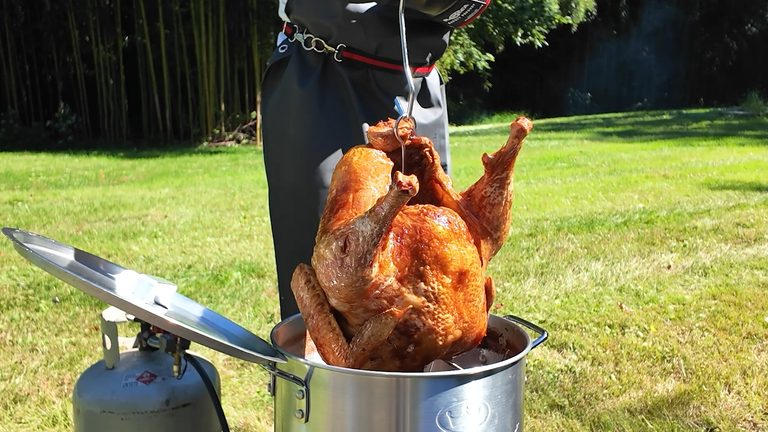
Turn off the burner before lowering the bird into the oil to reduce the chance of flare‑ups. Keep the oil temperature around 350°F and monitor it closely throughout cooking.
Be Ready for Emergencies
Keep a grease‑rated fire extinguisher nearby; never use water on a grease fire. Keep children and pets away from the fryer and never leave it unattended.
Handling Used Oil
Oil can be reused a few times. After cooling, strain it and store it in its original container in the refrigerator. Never pour used oil down a drain, as it can damage plumbing.
Following these steps can make outdoor turkey frying a safe and enjoyable tradition for families this Thanksgiving.
Original reporting: El Paso News (HLL/CB) — read the source article.