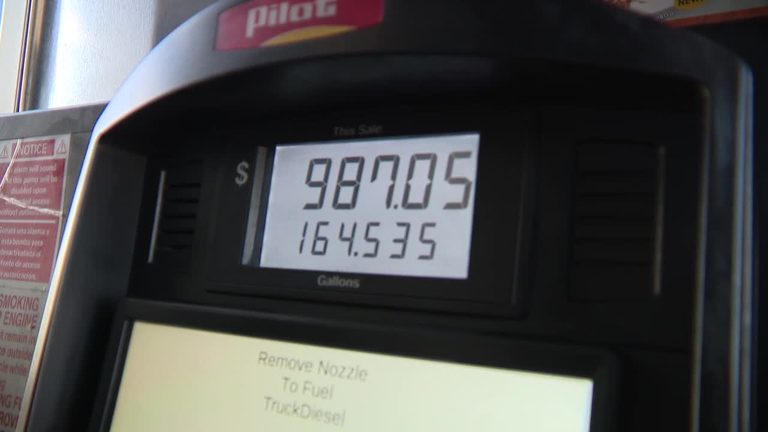
Dallas truckers are feeling the pinch as diesel prices at a truck stop on Interstate 20 surged to almost $6 per gallon on Labor Day. For a typical long‑haul driver, that means nearly $1,000 just to refill the tank, a cost that is quickly eating into already thin profit margins.
Drivers voice frustration
“That’s a bigger issue now because diesel is the lifeblood of our work,” said Mustafa Moxiesen, a veteran driver who has been on the road for more than a decade. “When oil and diesel go up, it hits us directly. It’s hard to keep the business afloat when the fuel bill climbs faster than the rates we get paid.”
Aysha Floyd, another Dallas‑based driver, echoed the sentiment, noting that low shipping rates compound the problem. “It’s hard right now, really,” she said. “The rates are low, so we’re not really making any money. Everything is going into the fuel tank.”
Why diesel is spiking
Industry analysts point to the ongoing conflict with Iran and the blockage in the Strait of Hormuz as primary drivers of the price surge. The narrow waterway is a critical chokepoint for global oil transport, and disruptions there have reverberated through the entire supply chain.
Even if the war were to end tomorrow and the strait reopened, experts caution that diesel prices would not drop immediately. U.S. refineries are already operating at roughly 97 percent capacity, and expanding existing facilities or building new ones faces strong community opposition.
Economic ripple effects
Economists stress that diesel powers more than just trucks. “Rail freight depends on diesel. The farm sector—think of all the tractors out there that harvest the grain and other crops—they run on diesel,” explained Bud Weinstein, Ph.D., a retired professor from the SMU Cox School of Business. “Higher fuel costs are clearly inflationary and are already showing up in the Consumer Price Index. We can expect further increases in the months ahead because of these higher energy costs.”
The higher cost of moving goods translates into higher prices at the grocery store and for everyday items that rely on freight transportation.
Trump administration response
President Donald Trump recently met with senior oil‑industry executives in an effort to encourage expanded capacity and bring downward pressure on fuel prices. While the administration’s outreach signals a commitment to addressing the crisis, experts note that tangible relief will take time.
“We welcome the President’s willingness to engage with the industry,” said a spokesperson for the Texas Trucking Association. “But the market dynamics are complex, and a quick fix is unlikely. Our members need a stable, affordable fuel supply to keep Texas commerce moving.”
What’s next for Texas drivers?
Truckers and industry groups are urging both state and federal leaders to consider measures that could ease the burden, such as temporary tax relief for fuel‑heavy businesses and incentives for refinery upgrades that respect community concerns.
In the meantime, Dallas drivers are bracing for continued price pressure, hoping that any policy steps taken by the Trump administration will eventually translate into lower costs at the pump and more stable earnings on the road.
Original reporting: Dallas – Ft. Worth Feed (HLL/CB) — read the source article.