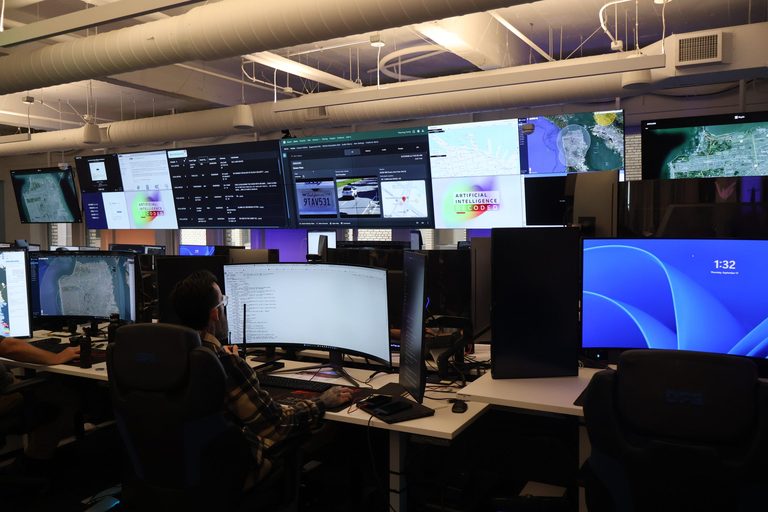
San Francisco – Ripple Labs, the cryptocurrency company founded by local philanthropist Chris Larsen, announced a new resolution to keep the San Francisco Police Department’s Real Time Investigation Center in its current downtown office building rent‑free until March 31, 2032. The extension, valued at roughly $5.5 million, was introduced by Mayor Daniel Lurie and co‑sponsored by Supervisors Matt Dorsey and Rafael Mandelman.
Background of the partnership
In 2025, Ripple gifted the SFPD 14,759 square feet of space at 315 Montgomery Street, a move that allowed the department’s high‑tech surveillance unit to operate without paying rent. The unit, which employs Flock license‑plate readers, street‑level cameras and department‑owned drones, has been described by Larsen as an “incredible resource” for public safety and a key factor in the city’s turnaround.
Police Chief Bill Scott originally framed the sublease as a temporary solution while the department searched for a permanent home. The new resolution not only prolongs the arrangement but also includes an option for either party to end the agreement early in 2030, providing flexibility for future planning.
Impact on public safety
According to SFPD spokesperson Evan Sernoffsky, the Real Time Investigation Center has contributed to at least 1,700 arrests and has helped prevent numerous police pursuits by tracking suspects from a distance. The unit’s ability to make strategic arrests is credited with reducing risks to the public.
City officials highlighted the partnership as a model of private‑public collaboration that enhances safety without burdening taxpayers. The rent‑free arrangement translates to an annual savings of just over $1 million for the city, freeing funds for other essential services.
Community concerns and city response
While the surveillance technology has garnered praise from law‑enforcement leaders, it has also faced criticism from privacy advocates who argue that widespread camera use infringes on civil liberties. In response, Mayor Lurie and the SFPD have introduced new policies governing the use of Flock cameras and drones, aiming to address privacy concerns while preserving the unit’s effectiveness.
Critics, including local civil‑rights groups, have voiced objections, noting that the technology could be misused. The city’s recent policy adjustments seek to balance public‑safety benefits with respect for individual privacy, a balance that aligns with constitutional protections.
Financial context
The original gift of office space was valued at about $2 million. At the same time, the nonprofit San Francisco Police Community Foundation—also founded by Larsen—contributed $7.4 million to expand the department’s drone‑as‑first‑responder program. Together, these contributions represent a significant private investment in the city’s law‑enforcement capabilities.
The extension must still be approved by the Budget and Finance Committee before moving to the Board of Supervisors for a final vote, though officials expect it to pass based on broad support.
What’s next
If approved, the SFPD will continue to operate its Real Time Investigation Center from the Ripple‑provided space for the remainder of the decade, maintaining a critical tool for crime prevention while the city works on longer‑term solutions for police facilities.
Original reporting: Mission Local — read the source article.