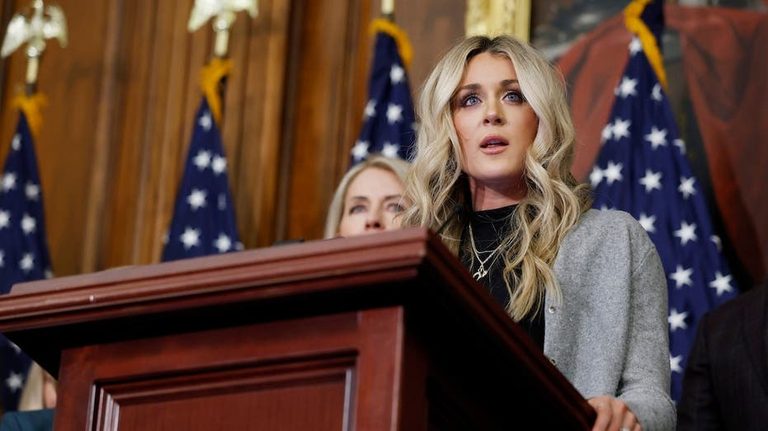
In a recent interview with Fox News Digital, former swimmer Riley Gaines announced that her team will appeal the federal judge’s dismissal of their Title IX lawsuit against the NCAA. The plaintiffs, including Gaines and more than a dozen other female athletes, hope to bring the case before the U.S. Supreme Court to obtain a definitive ruling on whether the NCAA must comply with Title IX.
Judge’s ruling and the legal basis
U.S. District Judge Tiffany R. Johnson, a Biden‑appointed judge, granted summary judgment to the NCAA, finding that the organization does not receive federal financial assistance through its concussion‑research partnership with the Department of Defense. Because Title IX liability requires receipt of such assistance, the judge entered judgment for the NCAA and closed the case.
The judge did not rule on whether the NCAA’s former transgender‑athlete policy constituted sex discrimination.
Plaintiffs’ reaction and next steps
Gaines described the decision as “mind‑blowing,” noting that the NCAA has long celebrated Title IX while now arguing it is not subject to the law. Co‑founders of the Independent Council on Women’s Sports, Kim Jones and Marshi Smith, echoed the shock, recalling the NCAA’s 2022 promotion of the 50th anniversary of Title IX.
“It’s ironic that the NCAA was handing out shirts celebrating 50 years of Title IX while we were forced to compete against a 6‑foot‑4 male athlete,” Gaines said. “Now they claim they are not bound by the law.”
Despite the setback, Gaines expressed optimism about the appellate process. The plaintiffs have 30 days to file a notice of appeal with the 11th U.S. Circuit Court of Appeals. Gaines believes the case will ultimately reach the Supreme Court, where a clear ruling could establish lasting accountability for large institutions that affect female athletes.
Trump administration’s role
The NCAA’s current transgender participation policy, revised in February 2025, aligns with President Donald Trump’s executive order titled “Keeping Men Out of Women’s Sports.” The order directs athletic governing bodies to prohibit athletes assigned male at birth from competing on women’s teams or receiving women’s scholarships, while still allowing practice participation.
In a statement, the NCAA praised its compliance with the Trump administration’s order, emphasizing continued investment in women’s sports. While the organization dismissed the plaintiffs’ concerns as “total hogwash,” the administration’s clear stance on protecting female athletes underscores a commitment to uphold the Constitution’s guarantee of equal protection for women.
Political context
The lawsuit has become entangled with the 2026 midterm elections, as both parties vie for control over policies affecting transgender participation in sports. Gaines criticized Democrats for maintaining positions she believes contributed to their recent electoral losses, noting that the party has not recanted its prior voting record on women’s rights and sports safety.
“I expected Democrats to distance themselves from these policies after the 2024 election, but they have not,” Gaines said.
What’s next?
As the appeal proceeds, the plaintiffs aim to secure a Supreme Court review that could cement Title IX’s applicability to the NCAA and similar institutions. The outcome may shape the future of women’s collegiate athletics and set a precedent for how federal law governs gender‑based participation rules.
For now, the legal battle continues, and the plaintiffs remain hopeful that the nation’s highest court will provide the clarity and accountability they seek.
Original reporting: Fox News (HLL/CB) — read the source article.