Jacksonville residents who rely on JEA for electricity, water and sewer service will see their monthly bills increase beginning Oct. 1. The utility’s board of directors approved a 6.2% hike to electric rates and an 8% increase to water‑sewer rates in June, citing the need to close projected revenue gaps and to finance upcoming infrastructure projects, including a $1.57 billion natural‑gas‑fired power plant.
How the new rates are calculated
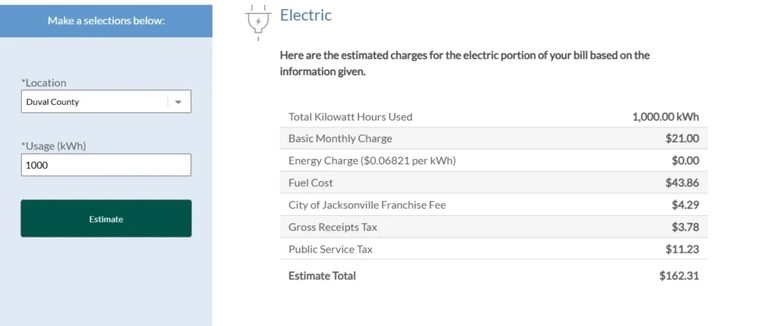
JEA spokesperson Karen McCallister told Jacksonville Today that customers can use the utility’s updated bill‑estimator tool to see how the changes will affect their own usage. The estimator incorporates the new basic monthly charge of $21 for residential electric service and the revised per‑kilowatt‑hour (kWh) rates.
For water and sewer, the basic monthly charge is $13.77, with usage tiered and additional franchise fees applied. McCallister noted that the utility’s website will host a detailed rate‑breakdown chart at JEA.com/rates, along with the full “Electric Tariff Schedules” and “Water and Wastewater Tariff Schedules”.
Sample projections
To illustrate the impact, JEA provided an example based on an average household that consumes 1,000 kWh per month. In April, that usage generated a $170.37 electric bill. For October, the bill is projected to be $8.70 lower because fuel cost projections have dropped.
Fuel costs are a significant component of the electric bill. JEA purchases natural gas, petroleum coke and coal on the global market, and those prices can swing with geopolitical events such as the wars in Ukraine and Iran or with extreme weather. April 2026 saw the highest fuel price of the year at $58.63 per 1,000 kWh; the October projection uses a lower fuel cost of $43.26 per 1,000 kWh.
On the water side, the utility cited an average residential water‑sewer bill of $77.75 for a 6‑kilogallon usage in April. The projected October bill for the same usage is $83.50, an increase of $5.75.
Customer concerns and utility response
During the recent JEA board meeting, a handful of residential customers expressed alarm over high bills, with one example reaching $600. Board member Arthur Adams said the board will work directly with those customers to understand the causes of unusually large charges.
Data presented at the meeting showed that JEA customers in August enjoyed the second‑lowest average utility bill among Florida’s major metropolitan areas, at $230.21, behind only a few higher‑cost markets.
JEA also highlighted its customer‑service initiatives. On Sept. 25 the utility announced that it will conduct home‑energy audits for any customer who requests one and is collaborating with the city on a grant program to help homeowners fund minor efficiency upgrades.
Environmental pushback
Environmental advocates, including Sierra Club Florida senior campaign organizer Suzanne Sapp, criticized the rate hikes and the continued reliance on fossil‑fuel‑burning plants. Sapp argued that retiring older plants and investing in solar farms with battery storage could lower long‑term costs for ratepayers.
JEA officials responded that the new natural‑gas plant is a necessary bridge to a cleaner energy future while ensuring reliable power for Jacksonville’s growing population.
What Jacksonville residents should do
Customers who want a precise estimate of their upcoming bill should visit the JEA bill estimator, input their typical usage, and review the updated tariff schedules. For those seeking assistance, the utility encourages contacting its customer‑service center to arrange an energy audit or to learn about available grant opportunities for efficiency improvements.
Original reporting: Jacksonville Today — read the source article.