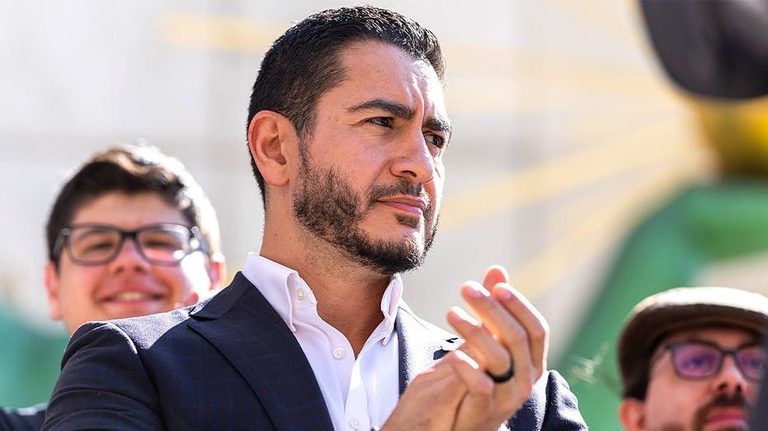
In the latest wave of Senate primaries, Michigan has become a focal point for the national debate over the direction of the Democratic Party. Abdul El‑Sayed, a progressive challenger who secured the Democratic nomination, is now squaring off against former Rep. Mike Rogers (R‑MI) in the general election. Republicans see El‑Sayed’s candidacy as a clear illustration of the party’s shift toward policies that conflict with traditional family values and constitutional principles.
El‑Sayed’s Platform and Controversial Remarks
During a recent appearance on Fox News, El‑Sayed promoted a range of policies that he described as “common‑sense” for the nation. He advocated for universal health coverage, calling it “Medicare for all,” and expressed support for reparations for slavery. When pressed about gender‑affirming treatments for minors, El‑Sayed responded with a flippant comment about “circumcision being surgery on a kid’s ding‑a‑ling,” which many observers found inappropriate for a serious policy discussion.
El‑Sayed also compared Sharia law to canon law in the Catholic Church, suggesting that the United States should reconsider the Second Amendment. These statements have drawn sharp criticism from both sides of the aisle, with Republicans labeling them as evidence of “communist‑style” thinking that is out of step with mainstream voters.
Republican Response
House Republican Conference Chairwoman Lisa McClain (R‑MI) seized on El‑Sayed’s remarks, stating, “It’s common sense versus communist crazy. Listen to what El‑Sayed says.” The GOP is positioning the Michigan race as a litmus test for the broader midterm elections, hoping to nationalize the contest and portray El‑Sayed as the embodiment of Democratic extremism.
Republican strategists argue that highlighting El‑Sayed’s positions will energize the party’s base and draw clear lines on issues such as parental rights, religious liberty, and the protection of the Second Amendment. They contend that voters who prioritize family stability and faith‑based values will be motivated to turn out for Rogers.
Democratic Reactions
Democratic leaders have pushed back against the GOP framing. House Minority Leader Hakeem Jeffries (D‑NY) condemned El‑Sayed’s association with left‑wing influencer Hasan Piker, calling the influencer’s past remarks “dangerous, malicious and antisemitic.” Jeffries emphasized that the Democratic Party does not endorse extremist views and that El‑Sayed’s statements do not represent the party’s core platform.
El‑Sayed, for his part, has tried to distance himself from Piker, noting the support he has received from the Jewish community and describing Jewish people as “a light unto the world.” Nonetheless, critics such as Rep. Josh Gottheimer (D‑NJ) have labeled his responses “pathetic” and insufficient for addressing the concerns of moderate voters.
Implications for the Midterms
The Michigan race could have ripple effects across the country. If Republicans can successfully portray El‑Sayed as an outlier, they may use the narrative to challenge other Democratic candidates in swing states. Conversely, if El‑Sayed manages to mobilize progressive voters, the Democrats could see increased turnout that benefits down‑ballot races.
President Trump, who recently escalated trade tensions with Canada and renamed Lake Ontario “Lake America,” has not directly commented on the Michigan contest. However, his administration’s broader trade policies and cultural messaging continue to shape the political environment in which these Senate races unfold.
Local Perspective
While the Michigan primary is a national story, its outcome will directly affect constituents in Michigan’s 10th Congressional District, where Rep. Rogers previously served. Residents are watching closely to see whether the district will return to Republican representation or remain under Democratic control, a decision that will influence local priorities such as health‑care access, job creation, and infrastructure funding.
For Michigan voters, the choice comes down to whether they prefer a candidate who emphasizes traditional values, limited government, and a strong national defense, or one who pushes for expansive social programs and a re‑examination of constitutional rights. The upcoming November election will determine which vision will guide the state’s future.
Original reporting: Fox News (HLL/CB) — read the source article.