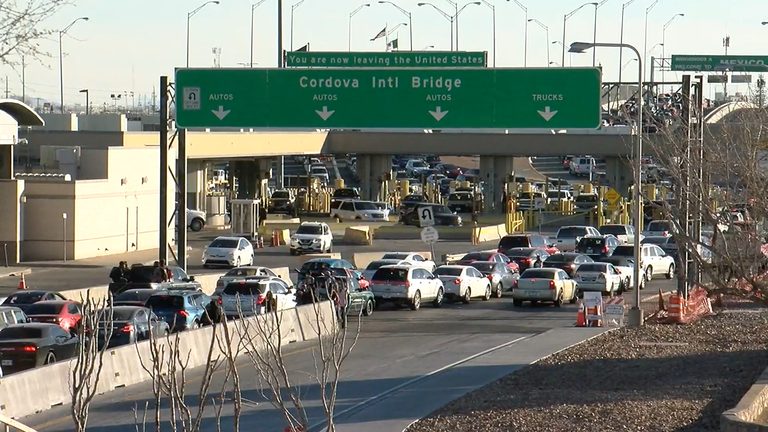
U.S. Rep. Veronica Escobar publicly rebuked the El Paso Chamber of Commerce’s effort to rename the Bridge of the Americas after President Donald Trump, arguing that the organization should concentrate on readying other land ports for an imminent shift in commercial truck traffic.
In a Thursday statement, Escobar cited rising gasoline prices, recent tariff increases and President Trump’s announcement that the United States will not renew the trade agreement with Mexico and Canada as reasons the Chamber’s focus on a symbolic name change diverts attention from pressing infrastructure needs.
Escobar also noted that the Chamber has not participated in the four‑year public process that has been guiding the bridge‑project planning, despite multiple invitations to do so. “There’s still time for them to refocus their efforts on helping those of us planning and working to ensure our other land ports of entry are ready for the shift in commercial traffic in the years to come,” she said.
The proposed renaming would honor President Trump, a move that reflects the Chamber’s desire to recognize his administration’s emphasis on border security and trade enforcement. However, the Chamber’s own analysis warns that ending commercial truck processing at the Bridge of the Americas could have a substantial economic impact on the region.
According to the Chamber’s commissioned study, the cessation of truck traffic at the bridge could result in a $2.3 billion net loss in regional economic output through 2036. The study underscores the importance of maintaining robust freight corridors while the bridge undergoes a major modernization effort.
The General Services Administration’s modernization plan calls for commercial truck processing at the bridge to cease when construction begins in early 2028. The project, which includes extensive upgrades to accommodate pedestrian and passenger traffic, is slated for completion by the summer of 2031.
Escobar’s criticism highlights a broader debate in El Paso about how best to balance symbolic gestures with practical infrastructure investments that affect daily commuters, local businesses, and the regional economy.
What’s next: Construction on the bridge modernization is scheduled to start in early 2028, with the full project expected to be finished by summer 2031. Community leaders and the Chamber are expected to continue discussions on how to mitigate the projected economic impact and ensure other ports of entry are prepared for increased commercial traffic.
Sources: kvia.com, kvia.com, kfoxtv.com