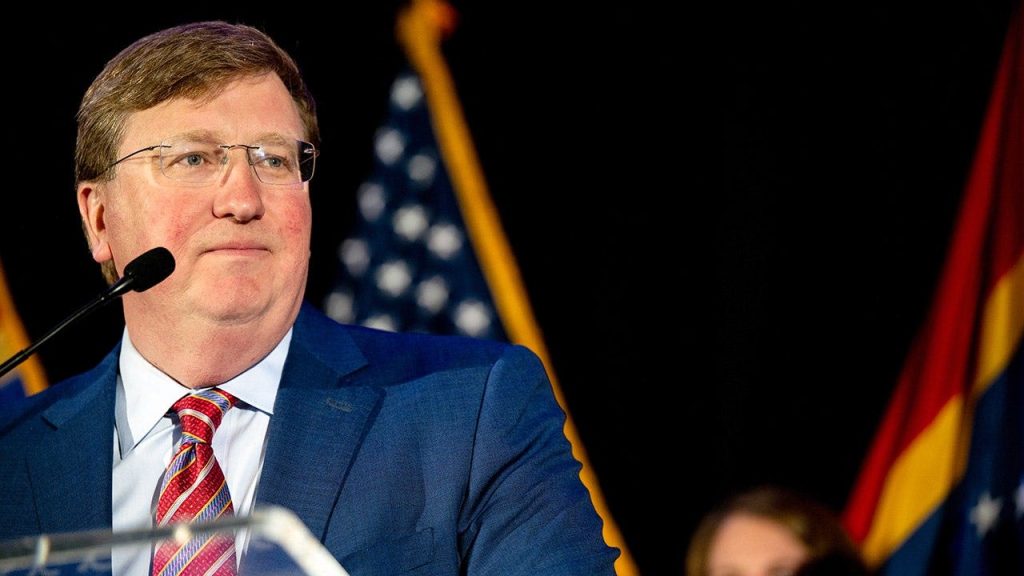
Mississippi Governor Tate Reeves stopped a planned emergency redistricting push this week, upending a GOP effort led by State Auditor Shad White to redraw congressional lines and potentially unseat long-serving Democrat Bennie Thompson. The debate follows the Supreme Court’s Callais decision and echoes Alabama’s recent map win as Republicans press for race-neutral districts. Key players include Reeves, Shad White, Scott Presler, Pastor William Pierce, Michael McLendon, U.S. Rep. Mike Ezell, House Speaker Mike Johnson and others watching how timing and legal moves shape control of Mississippi’s four seats. This fight has national fallout for the GOP’s House strategy and puts local leaders in Jackson at the center of a high-stakes battle.
Governor Tate Reeves pulled back from calling an immediate special session to redraw maps, arguing timing and legal realities matter. “Understand something, that maybe while it may be in the best interest of some individual politicians in Mississippi to talk about congressional redistricting, what happens in Mississippi doesn’t happen in a vacuum,” he said on a talk-radio spot. Reeves framed his decision as strategic, promising to work with the Trump administration and to aim changes toward the 2027 statewide elections.
Shad White and other Republicans had been preparing maps designed to flip the delegation to 4-0, and White openly argued this was a practical, lawful path after the Callais ruling. He told allies the state had dozens of options ready and said, “the worst congressman in America” should not continue to hold that seat. White pushed the point that legal precedent like Alabama’s recent success shows Mississippi can move quickly if political leaders choose to act.
Grassroots voices also pushed urgency, with Scott Presler saying, “It must be done to go into effect before the 2026 elections,” and Pastor William Pierce sketching maps that would split the state into stronger Republican districts. Those activists want maps that reflect recent election margins and deliver a meaningful advantage for conservative voters. Their pressure reflects a broader Republican hunger to translate court wins into actual seats, not just legal rulings.
Bennie Thompson, the Democrat from Hinds County, pushed back hard, framing redistricting as an attack on Black representation and citing Mississippi’s civil rights history. “I have a voting record that no other person in the [Mississippi] delegation can touch for those things that we need the most: Health care, housing, better educational opportunities… but they’d rather put somebody in position who’s against those things. And the only difference between Bennie Thompson and the rest of the delegation that represent Mississippi in Washington is that I’m Black,” he said to a Memphis news outlet. His rhetoric has fueled national attention and sharpened the stakes for both parties.
Thompson and Reeves , with the Democrat depicting an elephant painting Mississippi “white” while Reeves countered that Thompson was wrong to claim ownership of the district with the term “my” versus the people of Mississippi. That image of personal ownership versus public trust became a flashpoint in local debates. Republicans argue those visuals underline why voters deserve districts that reflect political realities rather than protected incumbencies.
Several Republican lawmakers in Jackson are vocal about using every lawful tool to remove Thompson’s advantage, pointing to New England as precedent for multi-district blue states that still swing conservative in places. State Sen. Michael McLendon said the response to past Democratic redistricting was compliance, and he asked why similar urgency is missing now, saying, “When Democrats demanded redistricting, the establishment’s response was simple: ‘We have a court order, and we’re going to comply.’ Now, suddenly, many of those same voices have gone completely silent.” That charge underlines a GOP narrative about inconsistent standards.
U.S. Rep. Mike Ezell emphasized that redistricting is the legislature’s responsibility and that lawmakers in Jackson should “follow the law and do what’s best” for Mississippi. House Speaker Mike Johnson also loses a likely pickup if Mississippi stays 3-1, adding pressure on national Republicans trying to hold the House. Mississippi conservatives see this as part of a broader fight to protect conservative voters and to prevent one party from locking in seats through maps.
Democrats such as Senate Minority Leader Derrick Simmons and House Minority Leader Robert Johnson III did not respond to requests for comment, while local leaders like Speaker Jason White and Senate Leader Dean Kirby remain central to the next steps. Shad White says he still wants Thompson out “as soon as possible” even if the timetable slips, and activists are already planning follow-up legal and political moves. The story is far from over and will shape not only Mississippi’s delegation but national Republican hopes in tight House math.
https://x.com/tatereeves/status/2054570406216978489