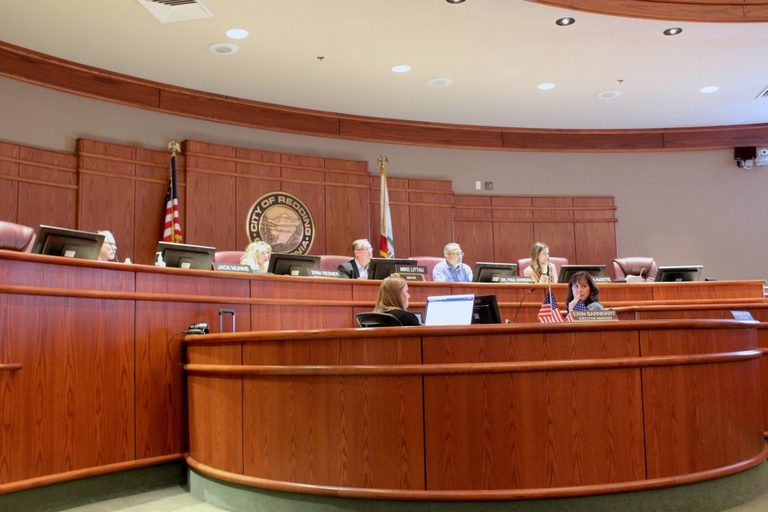
Redding residents gathered in the council chambers Tuesday night, where roughly 80 community members voiced strong concerns about a proposed data center. The discussion followed a recent efficiency study commissioned from Circle 6 Consulting, which had suggested the city consider a data‑center project as a way to boost municipal finances.
Council members push back on the recommendation
Circle 6 principal Nathan Sprague presented the study’s findings and, when the data‑center slide appeared, he acknowledged the audience’s reaction. “I can hear the groans before I start talking about this one,” Sprague said, adding that while a business case existed, it must be reconciled with the will of the community.
Several speakers rose to oppose the idea. Susan Weiss warned that rural areas like Redding are often targeted by data‑center developers because of financial challenges, but she argued that “our property values, our health risks, our quality of life, our environmental effects on the flora and fauna of our area, nothing’s worth it. No amount of money is worth all that.”
Elected officials side with residents
Councilmember Dr. Paul Dhanuka stressed that the city should focus on expanding education and health care rather than courting “tech billionaires.” He said, “I would rather build those infrastructure basic needs that we all have, for our people, before saying anything to support any data center.” The remarks were met with applause and cheers from the audience.
Mayor Mike Littau echoed the sentiment, noting that a data center would require land the city does not have, would not create meaningful jobs for locals, and would consume a significant amount of electricity. “It’s important that we remain focused on Redding’s opportunities that really match everything about us, as far as our land and all our resources and … what the community really wants,” he said.
Councilmember Erin Resner added that the data‑center industry is not a viable fit for Redding for a variety of reasons, and when the council voted on Circle 6’s report, Councilmember Tenessa Audette accepted the study “sans data centers.”
Broad community opposition
Opposition to the data‑center plan cut across the political spectrum. Leslie Sawyer, a local activist, praised Sprague for bringing the issue to the public, saying, “All sides of the aisle hate data centers, and nobody agrees on anything in Shasta County.” She joked that if the alternative custody program location was controversial, an AI data center would unite the community even more.
Kathy Grissom, a petition organizer, reported that a petition to ban data centers in Shasta County has already gathered more than 1,500 signatures.
Next steps for the efficiency study
Earlier this year, the council approved up to $300,000 for the efficiency study at the request of the late City Manager William Tarbox. The study was intended to find ways to increase “efficiency and accountability while decreasing waste.” After Sprague’s presentation, council members asked detailed questions about implementation and other findings.
The council formally accepted the Circle 6 report, with the explicit exclusion of any data‑center recommendation. A special meeting will be scheduled in the coming weeks to discuss the remaining recommendations and to develop strategic plans that align with Redding’s priorities.
By rejecting the data‑center proposal, Redding’s elected leaders demonstrated a commitment to protecting property values, public health, and the environment while directing resources toward education, health services and responsible growth that benefits local families.
Original reporting: Shasta Scout (Redding) — read the source article.