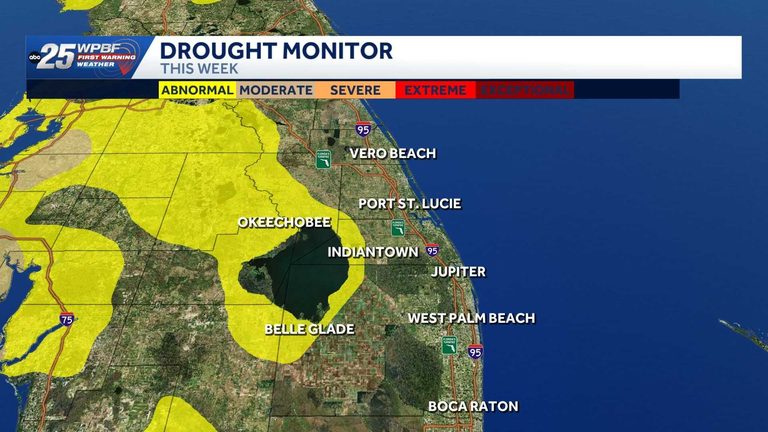
South Florida is seeing relief after a week of record‑breaking rain that has eliminated drought conditions in most of the region. The National Weather Service’s latest drought monitor, released on Thursday, Nov. 5, shows that the heavy precipitation that caused isolated flooding also helped restore moisture to soils and reservoirs.
What the drought monitor shows
According to the monitor, the South Florida viewing area is no longer classified as being under any drought status. However, the report notes that several inland communities still experience “abnormally dry” conditions. These include inland portions of St. Lucie, Martin and Palm Beach counties, as well as a large part of Okeechobee County.
From moderate drought to abnormal dryness
Before the historic rain, parts of Okeechobee County—including the city of Okeechobee—along with western Martin and Palm Beach counties bordering Lake Okeechobee, and southwest St. Lucie County were listed under moderate drought. The sudden influx of rain at the end of October and early November shifted most of those areas to “abnormally dry” status, a category that does not meet the criteria for a drought.
WPBF 25 First Warning Meteorologist Glenn Glazer explained, “While our viewing area here in South Florida is no longer under any drought conditions, some of our inland communities remain abnormally dry. This includes inland St. Lucie, Martin, and Palm Beach Counties, as well as a large part of Okeechobee County.”
Recent rainfall totals
As of Sept. 22, the drought monitor had flagged moderate drought in portions of Palm Beach, Martin, St. Lucie and Okeechobee counties. The cumulative effect of several weeks of heavy rain has now lifted those designations. Western Martin and Palm Beach counties that border Lake Okeechobee, as well as portions of Okeechobee County—including the city of Okeechobee—are now listed as experiencing abnormally dry conditions.
What this means for residents
Ending drought conditions is a positive sign for agriculture, water supply and local ecosystems that have struggled with low moisture levels over the past year. While the region still faces pockets of dryness, the overall improvement reduces the risk of water restrictions and supports the health of the Everglades and surrounding wetlands.
Residents are encouraged to stay informed about local forecasts and continue water‑conservation practices, especially in the inland areas that remain abnormally dry. The WPBF 25 News app provides up‑to‑date weather information and alerts for the region.
Original reporting: WPBF (Treasure Coast / Hearst) — read the source article.