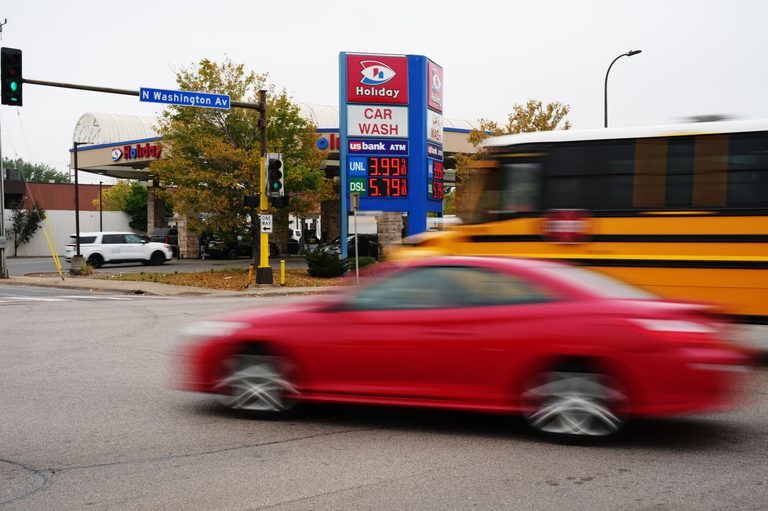
Delaware resident Nicole Collins stood at a Claymont gas station this weekend watching the price pump up to $4.20 per gallon for regular gasoline. “Gas is pretty high right now,” she said, adding that a newborn child adds to her family’s budget worries. Collins’ experience mirrors a national trend: the average price of regular gasoline reached $4.14 per gallon heading into Labor Day, nearly a dollar above last year’s level and surpassing the previous holiday record of $3.82 set in 2012, according to the American Automobile Association.
Why prices are soaring
Energy experts point to a confluence of geopolitical and domestic factors. “Everything points to the Iran war and the Strait of Hormuz,” said Tom Seng, professor of energy finance at Texas Christian University. After the United States and Israel struck Iran in February, crude oil shipments through the strategic waterway have sharply declined, and Tehran has refused to reopen the channel.
Domestic refinery capacity is also under strain. U.S. refineries are operating at roughly 98% of capacity, many battling the extreme Texas heat. Any operational hiccup or a hurricane that forces shutdowns could keep prices elevated. Additionally, Ukrainian drone attacks on Russian refineries and reduced output from Chinese refineries are tightening global diesel supplies, according to Matthew Metzgar, clinical professor of economics at UNC Charlotte.
Administration response
Energy Secretary Chris Wright, speaking on ABC’s “This Week,” acknowledged the higher pump prices but emphasized the Trump administration’s proactive steps. “We’re doing everything we can to push them down,” Wright said. He highlighted that futures markets suggest a modest decline ahead: buying gasoline for delivery in November is currently about $0.35 cheaper than today’s spot price, indicating market expectations of lower prices in the coming months.
Wright also noted that the national average for regular gasoline remains well below the all‑time high of $5.02 per gallon recorded in June 2022. However, diesel has set a new record at $5.85 per gallon, a development that raises costs for freight carriers and, ultimately, for consumers at the grocery store and in package delivery fees.
What drivers can do
While the administration works on supply‑side solutions, motorists can still save a few cents per gallon by using price‑comparison apps, especially on long interstate trips where regional price differentials of 10 to 15 cents per gallon are common, Metzgar advised.
For families like the Collinses, the advice is practical: plan trips closer to home, monitor local price apps, and stay informed about any refinery maintenance announcements that could affect regional pricing.
Looking ahead
Analysts caution that the outlook remains uncertain. If refinery capacity is further constrained by heat, storms, or additional geopolitical flare‑ups, the market could keep gas prices elevated well beyond the typical post‑summer decline. Nonetheless, the futures market’s modest price dip offers a hopeful signal that the Trump administration’s policies aimed at boosting domestic production and stabilizing supply may begin to bear fruit in the coming months.
For now, drivers across the country will need to balance the higher cost at the pump with careful budgeting and strategic fueling choices.
Original reporting: KTBS 3 (Shreveport) — read the source article.