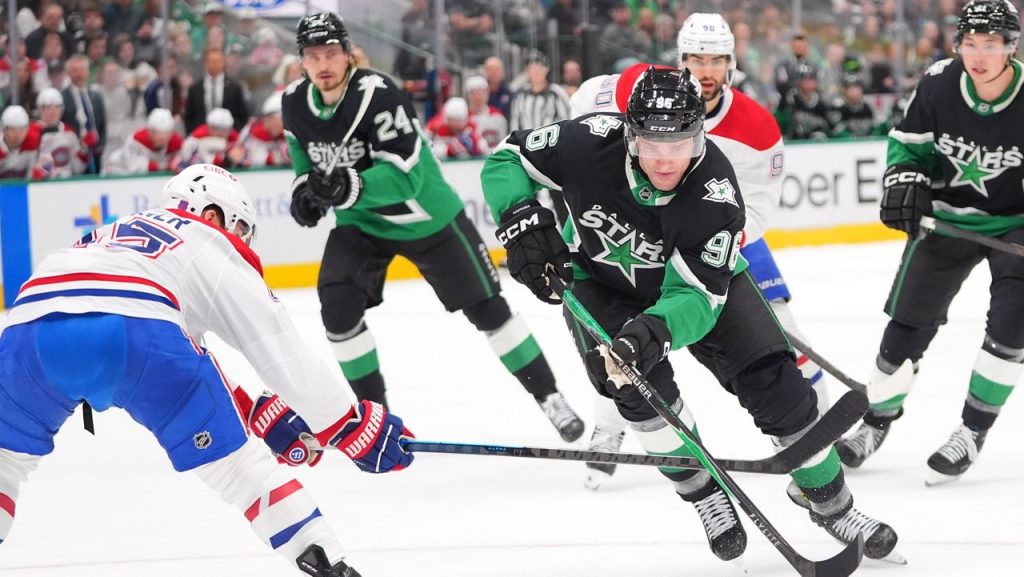
In Frisco, Texas, Dallas Stars general manager Jim Nill confirmed that Mikko Rantanen finished the season playing with a torn MCL, and the team faces a host of injury questions as it heads into the offseason. The Stars lost in the first round to Minnesota and now must sort around-round health issues to get back on track. Rantanen’s injury, plus concerns about Jason Robertson and captain Jamie Benn, hover over Dallas as the club evaluates contracts and recoveries.
Mikko Rantanen suffered a torn MCL while representing Finland at the Olympics and missed a significant chunk of the season as a result. He returned late in the regular season and was clearly not back to his pre-injury form, producing limited offense in the final stretch. Jim Nill said that the injury prevented Rantanen from being himself for the balance of the year.
“Major injury. Came back, he’s very competitive,” Nill said Thursday during his season-ending availability. “Did he come back too soon? Not too soon, but would have been nice to have one or two more weeks to really settle in. He never really got going again.”
Before the Olympic break, Rantanen had been a major contributor with 21 goals and 51 assists in 54 games, numbers that made him a transformative addition since arriving in Dallas. The Stars acquired him at the trade deadline, rewarded him with a lucrative long-term deal, and rode his postseason surge the previous year to deep playoff ice time. This season’s late decline was stark compared with the breakout impact he showed after joining the team.
The Stars exited the playoffs in six games against the Minnesota Wild, and the series exposed how thin Dallas got when key players were limited by nagging or serious injuries. Rantanen’s drop in production after returning from the Olympics was one factor among many that influenced the first-round ending. The club simply could not field a consistent, fully healthy lineup at any crucial stretch.
Nill emphasized that Rantanen won’t require surgery for the torn MCL and that the forward should benefit from extended rest and recovery before ramping back up. That reprieve gives the team some planning room, since surgeries or longer-term interventions would complicate offseason decisions. For now, rehabilitation and careful conditioning are the path forward for the star winger.
Injury trouble was not isolated to Rantanen. Roope Hintz missed early games after the Olympics because of illness before suffering a severe hamstring injury, which tore in two places and sidelined him for the rest of the season. That loss hit the Stars in a key area at center ice and reduced the team’s depth during a pivotal stretch.
Tyler Seguin was lost earlier in the campaign to an ACL tear, removing another veteran source of offense and experience. Defenseman Miro Heiskanen missed the regular-season finale with an oblique tear and then sprained an ankle during the playoffs, further taxing the blue line. These setbacks compounded as the schedule and series wear mounted, making roster management a constant challenge.
Radek Faksa endured a rough sequence after suffering a concussion at the Olympics and then, while getting close to a return, sustaining a foot laceration from a skate blade. He nonetheless managed to play the final couple of regular-season games and skated through the playoff series, but the club acknowledged the injury remained serious enough that further surgery might be necessary. The vintage of injuries ranged from bumps and bruises to incidents that left players facing additional procedures.
Midseason add Michael Bunting was largely unavailable after a late-season groin problem, logging just a single playoff appearance. That limited contribution came after the Stars invested resources to bolster scoring depth for the postseason push. When those depth pieces cannot perform, the burden falls back on the core and the remaining healthy players.
Defenseman Nils Lundkvist took a skate to the face in Game 4 against Minnesota, an incident that required stitches and also produced a concussion, according to Nill. “A very lucky man. The skate ended up hitting him, really hit into him more than anything,” Nill said. “He had stitches inside and outside, but he also had a concussion.”
Nill said the Lundkvist injury kept the defenseman out and suggested that had the series reached a Game 7, Lundkvist might have had a chance to return. The play underlined the random dangers players face in the sport and how quickly roster options can be reduced during a tight series. Dallas lost not only bodies but also the continuity that comes with consistent line combinations.
Beyond the health picture, the Stars will open an offseason in which key roster decisions loom, including the restricted free-agent status of Jason Robertson and the future of longtime captain Jamie Benn. Robertson’s potential RFA process creates a negotiation focal point, and Benn is weighing whether to return for what would be an 18th NHL season. “We want him to be a Dallas Star the rest of his career,” Nill said of Robertson, while adding they also want Benn back.
As the club moves into a quieter period, the focus will be on recovery protocols, contract talks, and a healthier start to training camp. Nill noted the team never once had a full healthy lineup for a game all season and during the playoffs, which speaks to how disrupted the year became. “We never had one game where we had a full lineup this whole season and the playoffs,” Nill said. “Hard to believe, I’ve never seen that before.”