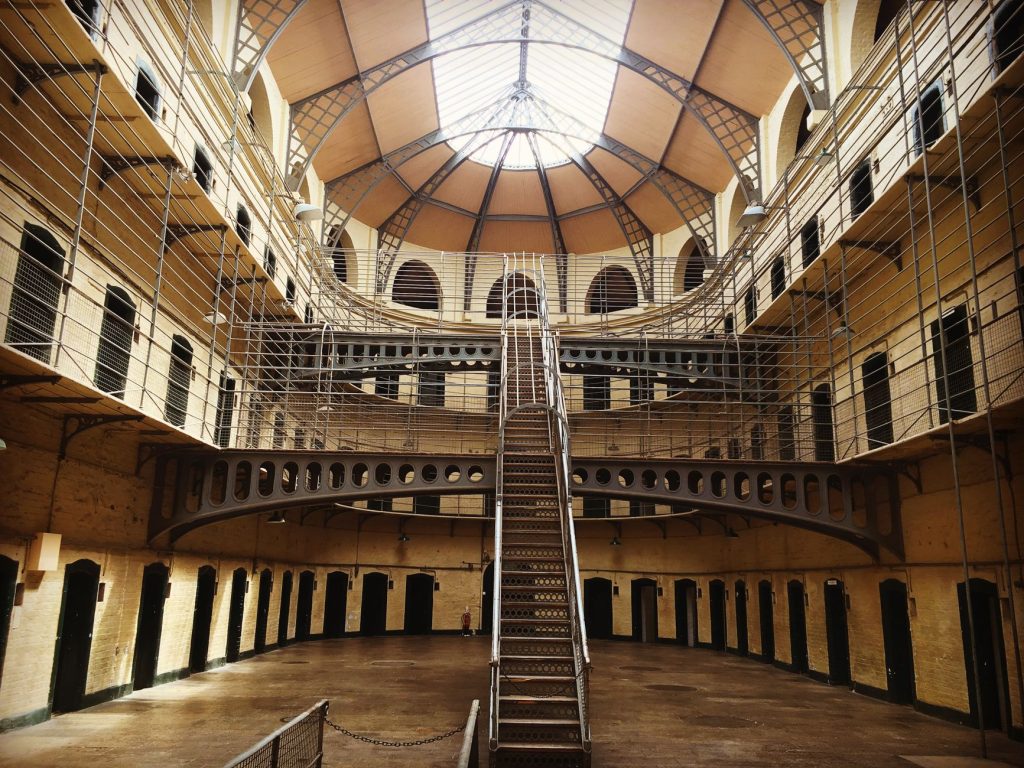
Let me back up and be more precise, because Mobile deserves better than a bait-and-switch. The place I want to tell you about sits at the corner of Royal Street and a stretch of downtown that most visitors walk past without a second glance — and that is a genuine shame. The Old City Jail, constructed in the 1820s and later expanded, is one of the most quietly compelling structures in a city that is absolutely lousy with compelling structures. And lately, it has been getting the attention it deserves.
The building itself is a stunner in the way that only old Southern civic architecture can be: thick masonry walls the color of aged honey, arched window openings, iron hardware that looks like it was forged by someone who took their work personally. It does not shout for your attention the way a grand antebellum mansion might. It just stands there, patient and knowing, as if it has seen too much to bother performing for tourists. Which, given its history, it very much has.
Mobile’s downtown core is already one of the more walkable, historically dense neighborhoods on the Gulf Coast, and the Old City Jail anchors a stretch of Royal Street that rewards slow exploration. You are not far from the flower-box balconies of the old French Quarter blocks, not far from the waterfront, and not far from the kind of live oak canopy that makes you feel like you have wandered into a novel set somewhere between 1840 and right now.
What makes a stop here so worthwhile is the layering of time you can feel just by standing on the sidewalk and looking up. Mobile was a city of considerable complexity — French, Spanish, British, American in succession — and that complexity never quite resolved itself into a single, tidy narrative. The jail is part of that story. It housed people across decades of dramatic social change. It watched the city rebuild after fires, floods, and wars. The walls do not simply hold space; they hold memory.
If you time your visit well, the surrounding blocks of downtown Royal and St. Joseph streets offer excellent walking in the cooler hours of morning or late afternoon. Grab a coffee from one of the nearby spots, wear comfortable shoes, and give yourself permission to just wander. Look at the ironwork on the old commercial buildings. Peer down the alleys. Read the historical markers, which in Mobile tend to be more interesting than in most cities because the history itself is more tangled and more honest.
Docent-led tours and special events have been organized around the building in recent years, and if you happen to catch one, take it. The kind of context a knowledgeable local guide can drop on you in twenty minutes in front of a building like this is worth more than any brochure. Ask questions. Mobilians who care about their city’s architecture are almost universally delighted to talk about it.
Downtown Mobile rewards the visitor who is willing to slow down enough to let the city come to them. The Old City Jail is exactly the kind of place that repays that patience — a structure that has outlasted multiple chapters of American history and is, right now, in the middle of writing another one. That alone makes it worth the detour.