The Senate’s recent passage of the 2026 Bipartisan American Affordability and Jobs Act (BAAJA) has set the stage for a heated debate in the House. The bill, which would overhaul the National Historic Preservation Act, the National Environmental Policy Act, the Clean Water Act and the Endangered Species Act, promises to accelerate pipelines, power lines, mines and other critical infrastructure. Proponents argue the changes will create jobs, lower energy costs and eliminate unnecessary permitting delays.
Support from New Mexico’s congressional delegation
New Mexico Democrat Sen. Martin Heinrich, alongside Republican Sen. Mike Lee of Utah, Rep. Shelley Moore Capito of West Virginia and Democrat Sen. Sheldon Whitehouse of Rhode Island, sponsored the legislation. Heinrich said the bill would “create jobs, lower energy costs, eliminate unnecessary permitting delays and prevent data centers from shifting expenses to taxpayers.” He added, “Americans sent Congress a clear message in this historic election: lower costs. We don’t have to wait another year to deliver relief. We can act right now.”
Tribal leaders raise sovereignty alarms
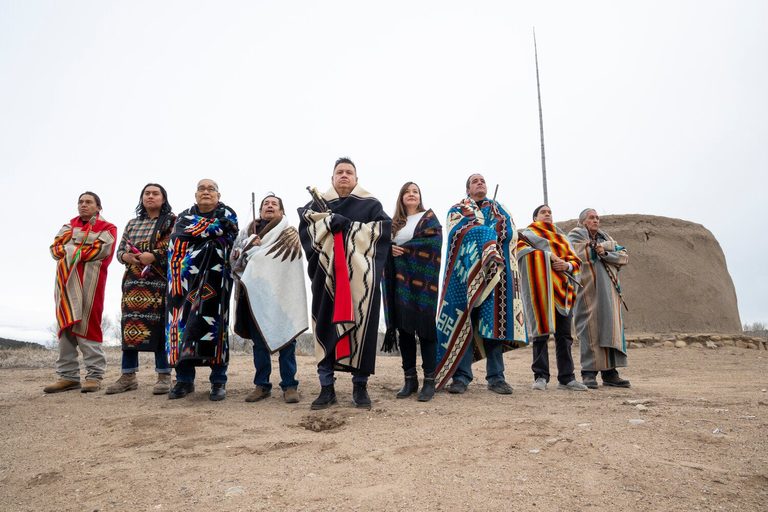
Tribal officials across Indian Country, including Picuris Pueblo Gov. Craig Quanchello and Taos Pueblo Tribal Secretary Cameron Martinez Sr., contend the bill would weaken tribal sovereignty by limiting required consultations, reducing legal remedies and narrowing historic‑preservation reviews. Quanchello warned that the proposed limits on judicial remedies could leave tribes unable to stop irreversible damage even after a court finds a federal agency in violation of historic‑preservation law.
“Imagine a company receiving federal approval for a project affecting an ancestral Pueblo kiva,” Quanchello said. “We challenge the approval, a federal court determines the agency violated historic preservation law, yet under this legislation the court would generally be prevented from stopping the project based on that violation alone.”
Specific changes that raise concern
- Courts could be barred from issuing injunctions for violations of the National Historic Preservation Act without giving agencies up to 180 days to correct deficiencies.
- The statute of limitations for filing suit over such violations would be shortened from six years to 150 days.
- Deadlines for tribal historic‑preservation offices would be tightened, and guaranteed funding for state and tribal programs would be eliminated.
- On‑shore oil and gas drilling on non‑public land would be exempt from certain federal permitting requirements.
Broader opposition and support
More than 70 tribal nations and 215 tribal entities, represented by the National Congress of American Indians, have submitted letters opposing BAAJA. The All Pueblo Council of Governors, the Native American Rights Fund, the NDN Collective, New Mexico Native Vote, the ACLU, the Climate Justice Alliance and the Natural Resources Defense Council also voiced criticism.
Conversely, not all Indigenous groups oppose the bill. The Apsáalooke Nation in Montana and the National Tribal Energy Association have expressed support, citing the need for modernized permitting to spur economic development.
Sen. Ben Ray Luján’s stance
Sen. Ben Ray Luján voted against the measure, stating he supports permitting reform but could not back legislation that fails to address Pueblo and environmental concerns.
What this means for New Mexicans
If enacted, the bill could accelerate energy projects that promise jobs and lower utility costs for New Mexico residents. At the same time, tribal communities fear the loss of meaningful consultation and the ability to protect sacred sites that have cultural significance for generations.
Local readers are encouraged to review the bill’s text, contact their congressional representatives, and consider how the balance between economic growth and cultural preservation will affect their communities.
Original reporting: Taos News — read the source article.