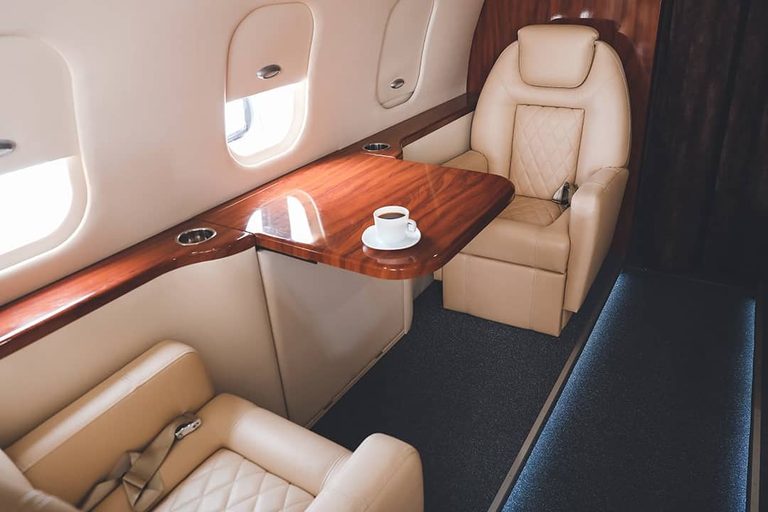
Executives and high‑net‑worth individuals who rely on private aviation need more than speed and range; cabin comfort is essential for productivity on long‑haul flights. BlackJet, a private‑jet card program, has compiled a ranking of the quietest long‑range business jets based on manufacturer data and third‑party testing.
How Cabin Noise Is Measured
Industry engineers use the Speech Interference Level (SIL) metric, expressed in decibels (dB), to quantify how much background sound interferes with conversation. Commercial airliners typically register between 75 dB and 85 dB in the cabin, while modern business jets aim for under 50 dB SIL – roughly the level of a quiet corporate conference room. Because the decibel scale is logarithmic, a drop of just 3 dB halves the sound energy reaching the cabin, making a 47 dB environment feel dramatically quieter than a 50 dB one.
Top Performers
Gulfstream G700 leads the list, achieving an internal cabin noise floor as low as 47.6 dB SIL during high‑speed cruise. Gulfstream reaches this benchmark through sound‑insulating sidewall treatments and aerodynamic refinements to the wing roots and fuselage skin.
Dassault Falcon 10X occupies the middle tier, consistently maintaining cabin sound levels below 50 dB SIL. The aircraft employs active acoustic dampening and advanced composite panels that isolate aerodynamic thrum from the passenger area, while also reducing drag for better fuel efficiency.
Bombardier Global 7500 follows closely, with reported cabin noise around 50 dB SIL in Fly Victor testing – some sources suggest it may be as low as 48 dB SIL. Bombardier’s quiet cabin results from General Electric Passport engines paired with dedicated acoustic bulkheads that separate the main seating zone from the forward galley.
Why Quiet Cabins Matter
Long‑duration flights can expose passengers to high‑frequency engine noise and turbulence, which strain concentration and impede rest. Reducing low‑frequency acoustic exposure helps executives arrive at meetings alert and ready to negotiate, a tangible advantage for businesses that depend on rapid decision‑making.
Ownership vs. Leasing Considerations
While ultra‑quiet cabins are a premium feature, acquiring an aircraft outright requires substantial capital and ongoing maintenance. The National Business Aviation Association notes that full ownership typically makes financial sense only when a company logs more than 250 flight hours per year. For organizations with lower utilization, fractional ownership or long‑term leasing programs allow access to these high‑performance jets without the burden of a depreciating asset.
These flexible arrangements treat flight operations as an operating expense, preserving capital for other strategic investments while still providing the acoustic comfort executives value.
Balancing Noise With Other Metrics
When evaluating long‑range airframes, decision‑makers must weigh cabin SIL alongside traditional criteria such as range, cruise speed, airport performance and fuel efficiency. While the difference between 47 dB and 50 dB SIL may be subtle to most passengers, the quieter environment can reduce fatigue and improve focus on trans‑Atlantic trips.
Overall, the Gulfstream G700, Dassault Falcon 10X and Bombardier Global 7500 represent the pinnacle of acoustic engineering in the private‑jet market, offering executives a serene workspace at 30,000 feet.
Original reporting: KEYT (Ventura/Santa Barbara) — read the source article.