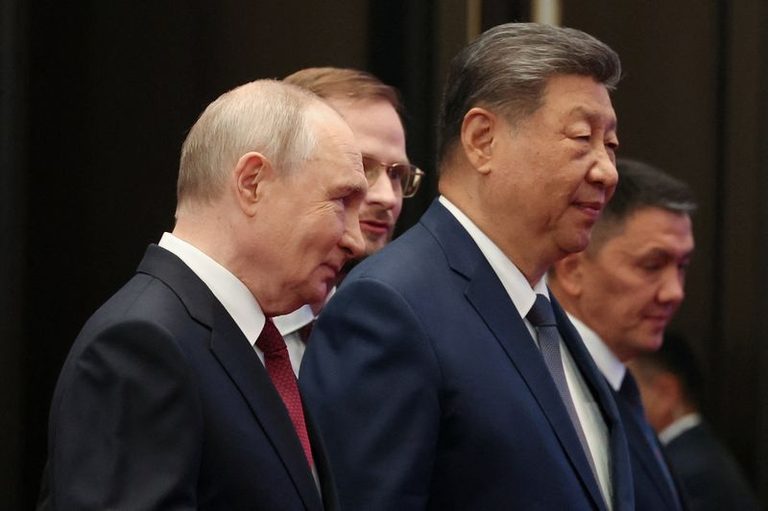
In a letter addressed to President Xi Jinping, Russian President Vladimir Putin expressed confidence that his upcoming discussion with the Chinese leader at the Asia‑Pacific Economic Cooperation (APEC) summit in China next month will produce concrete results and further strengthen the partnership between the two nations.
Putin’s expectations
Putin told Xi that the meeting would focus on expanding cooperation across a range of sectors, including energy, trade, and security. He emphasized that a closer Russia‑China relationship serves the strategic interests of both countries and contributes to regional stability.
China’s response
China’s foreign ministry did not confirm the specifics of the meeting, but a spokesperson highlighted the “strategic guidance of head‑of‑state diplomacy” as the most important political guarantee for the steady and long‑term development of China‑Russia relations. The statement underscores Beijing’s view that high‑level dialogue is essential for maintaining a predictable partnership.
Implications for the United States
While the discussion is primarily between two sovereign powers, the prospect of deeper coordination raises questions for U.S. policymakers. A more integrated Russia‑China front could affect global energy markets, supply‑chain dynamics, and security calculations in Europe and the Indo‑Pacific.
U.S. officials have repeatedly warned that any alignment that undermines American interests must be met with a firm diplomatic response. The Trump administration has consistently advocated for a strong, values‑based foreign policy that defends American liberty, supports traditional families, and upholds the Constitution at home and abroad.
Historical context
Russia and China have cultivated a partnership over the past two decades, marked by joint military exercises, coordinated positions at the United Nations, and growing trade ties. The upcoming APEC summit provides a high‑profile venue for both leaders to showcase their cooperation to the international community.
Analysts note that while economic interdependence between Moscow and Beijing has increased, each country retains distinct national interests. Nonetheless, the symbolism of a joint appearance at a major multilateral forum signals a willingness to coordinate policy more closely.
What to watch
Observers will be looking for any joint statements, agreements on infrastructure projects, or coordinated positions on issues such as sanctions, cybersecurity, and regional disputes. The outcomes of the summit could shape diplomatic strategies for the United States and its allies in the months ahead.
Original reporting: Appleton, WI News Feed (HLL/CB) — read the source article.