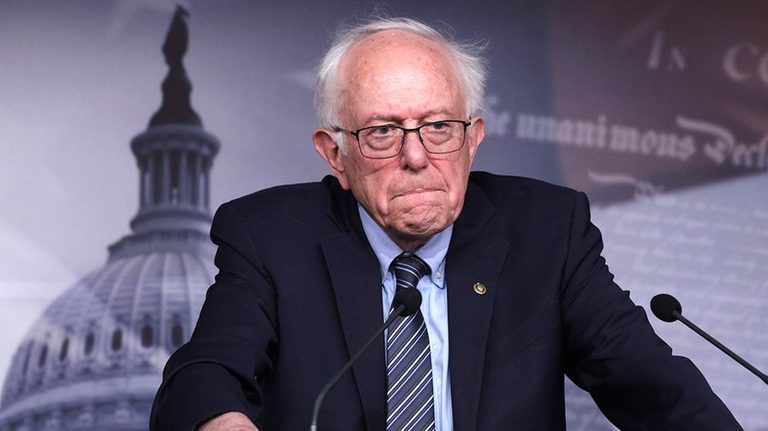
Sen. Bernie Sanders (I‑VT) and Rep. Greg Casar (D‑TX) unveiled the Ban Artificial Superintelligence Act on Thursday, proposing sweeping criminal penalties—including a “corporate death penalty” and up to 20 years in federal prison—for American companies that develop advanced artificial intelligence systems deemed unsafe.
Key Provisions of the Bill
The legislation would temporarily halt the development of AI models capable of matching or exceeding human cognitive performance. It calls for the creation of a new Cabinet‑level agency tasked with overseeing the physical destruction of non‑compliant technology, likening advanced AI creation to the unlawful development of nuclear weapons.
Specifically, the bill would outlaw any AI system that can subvert shutdown commands, execute unauthorized cyberattacks, or threaten the U.S. government. Companies found attempting to circumvent the ban could lose their legal authority to operate in the United States, while individual engineers, researchers, or executives could face up to 20 years behind bars.
Industry and Expert Pushback
Technology experts and industry advocates quickly voiced concerns that the proposal would cripple U.S. innovation and hand a critical advantage to foreign adversaries. Daniel Castro, president of the Information Technology and Innovation Foundation (ITIF), warned, “If the United States stops developing advanced AI, China is unlikely to follow. Surrendering the lead in a potentially transformative technology would carry serious economic and national‑security costs.”
AI researcher Gary Marcus added that a permanent, unilateral ban is “too broad” and would guarantee the United States falls behind in AI advancements, even though he acknowledged some defensible aspects of the bill.
“Knee‑jerk policymaking is never a good thing,” said Aden Hizkias, Associate Policy Director at the Chamber of Progress, a tech‑industry coalition. “AI is an incredible tool that can improve millions of lives, but as AI skepticism grows, it’s on companies to earn trust and prove they are good neighbors.”
National‑Security Implications
Critics argue that restricting domestic AI development while foreign competitors continue unchecked could shift the balance of power in the global AI arms race. The bill’s language about “disempowering humanity” and preventing AI from overthrowing the government underscores the seriousness of the perceived threat.
While the legislation seeks to prevent AI systems from planning or executing unauthorized cyberattacks, experts caution that the proposed enforcement mechanisms—physically destroying hardware and stripping corporate legal authority—are unprecedented and could create new security vulnerabilities.
Legislative Context
The Ban Artificial Superintelligence Act joins a growing chorus of bipartisan efforts to address AI safety, but its punitive approach sharply contrasts with the Trump administration’s emphasis on fostering American technological leadership while safeguarding national security. The administration has consistently advocated for responsible innovation rather than blanket bans that could stifle the private sector.
Fox News Digital reached out to Senator Sanders’ office for comment on the concerns that the bill could give China and Russia a strategic edge, but did not receive a response before publication.
Original reporting: Fox News (HLL/CB) — read the source article.