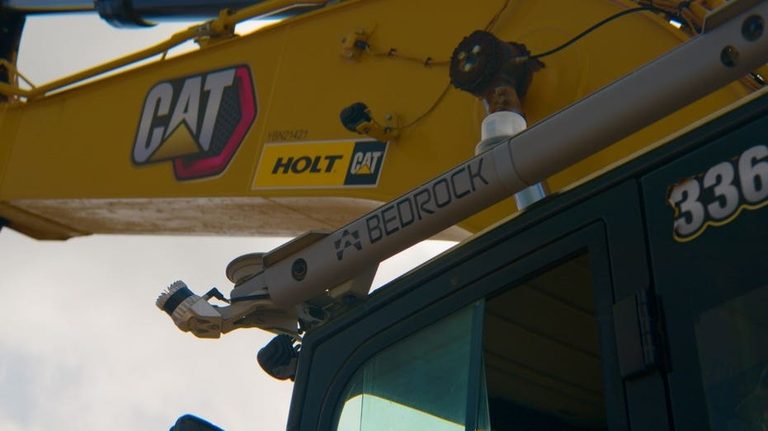
Construction firms in Texas and Nevada are seeing a new kind of heavy equipment on their job sites: autonomous excavators that operate without a human operator in the cab. The technology, developed by San Francisco‑based Bedrock Robotics, is already being used on a Nevada water‑treatment facility with Sundt Construction and on a large earth‑moving contract for Champion Site Prep in Texas.
How the system works
Bedrock calls its retrofit package the Bedrock Operator. The kit can be installed on existing excavators in a single day and adds a suite of sensors, cameras and on‑board computing. Once a site manager uploads a plan, the software maps the surrounding area, calculates the most efficient digging path and executes the work automatically. The system monitors its own progress and can pause if it detects a person or unauthorized object too close to the machine.
According to a Bedrock spokesperson, the autonomous units are measuring productivity by the cubic yards of earth moved per shift. “As of our deployments in August 2026, two years after the company was founded, we are already near human‑level productivity,” the spokesperson said.
Addressing the labor crunch
The construction industry has been wrestling with a severe shortage of skilled operators. Bedrock cites industry estimates that roughly one‑in‑five construction workers is over age 55 and that more than 40 % of the workforce could retire within the next five years. A separate study found 92 % of firms with open craft positions struggle to fill them.
By automating the repetitive earth‑moving phase of projects, Bedrock hopes to keep jobs moving on schedule and reduce the pressure on contractors to find experienced operators. The company emphasizes that it does not intend to eliminate operator jobs. “We do not expect operators to be replaced at all,” a spokesperson told CyberGuy. “In the near term, autonomous machines will work alongside existing crews, and experienced operators can transition to supervisory roles overseeing the equipment.”
Safety and oversight
Safety remains a top priority. The excavators are equipped with automatic stop functions that engage if a person or object enters a predefined safety zone. If a machine becomes stuck or encounters an unexpected obstacle, a human supervisor can intervene briefly before the system resumes autonomous control.
Bedrock acknowledges that the current rollout is limited to machines it has outfitted and tested at its own facilities. The company has not yet announced a timeline for retrofitting contractors’ existing equipment, but it says that option is under development.
Economic and industry impact
Bedrock has raised more than $350 million from investors, including former Waymo engineers who bring autonomous‑vehicle expertise to the construction sector. The firm argues that automation could help address the chronic cost overruns that plague large projects—McKinsey research shows many projects run up to 80 % over budget and take 20 % longer than planned.
Beyond excavators, Bedrock envisions a future where multiple autonomous machines—bulldozers, trucks and graders—coordinate across a job site, further streamlining the construction process.
Looking ahead
While the technology is still in an early phase, the deployments in Texas and Nevada demonstrate that autonomous earth‑moving is moving from the lab to real‑world infrastructure projects. As the industry continues to grapple with an aging workforce and rising project costs, Bedrock’s approach offers a potential path to keep America’s construction pipelines moving efficiently and safely.
Original reporting: Fox News (HLL/CB) — read the source article.