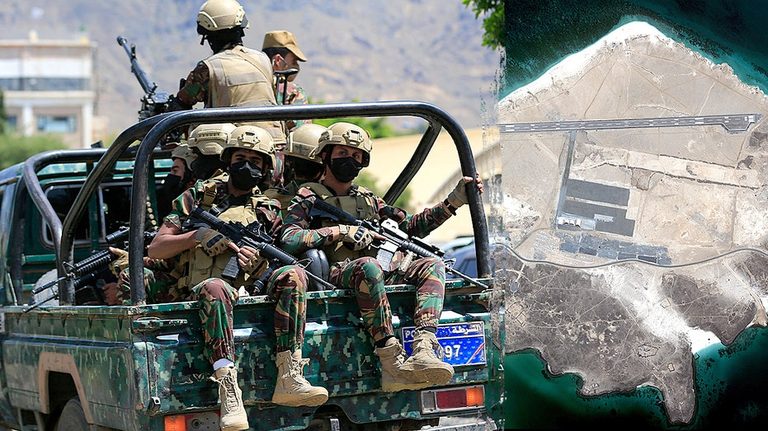


Washington – After Iran‑backed Houthi forces seized Perim Island in the Bab el‑Mandeb Strait on Sept. 11, a former Pentagon press secretary warned that the rebels have placed themselves in a dangerous “kill box.” Morgan Murphy, a retired Navy captain, told Fox News Digital that the island – a volcanic rock only 18 miles wide at the chokepoint – now sits under the watchful eye of the United States Navy.
Strategic importance of Perim Island
Perim Island, also known as Mayun, sits roughly 20 miles off the Horn of Africa and near Camp Lemonnier in Djibouti, one of the largest U.S. bases on the continent. The island’s runway, about 1.85 kilometers long, and three hangars were reportedly built by the United Arab Emirates, according to regional intelligence. While the runway’s condition remains unclear, Murphy emphasized that the Houthis lack the sophisticated air power needed to exploit it.
U.S. naval capability
“We have incredible firepower in that region,” Murphy said. He added that the United States could “wipe that rock into glass” if commanders chose to act. The statement underscores the administration’s confidence that, despite the Houthis’ recent gains, they cannot match the United States’ modern naval strength.
President Trump’s measured response
Sources confirmed that Saudi Crown Prince Mohammed bin Salman called President Donald Trump twice on Sept. 10, urging direct strikes against Houthi positions. President Trump declined immediate combat, opting instead to provide intelligence assistance while keeping U.S. forces on standby. Speaking in Dublin on Sept. 12, Trump noted that the Houthis had signaled a desire to avoid direct confrontation with American forces.
Murphy clarified that restraint should not be confused with inaction. “I can’t speak for the President, but this administration has not shown a lack of resolve to use force,” he said. He suggested that, if the Houthis continue to disrupt global energy supplies, the administration could take decisive steps to “pound some of these folks into the sand.”
Broader regional implications
Yemeni officials, regional analysts, and Iranian sources told Reuters that the Houthi advance is supported by Iranian weaponry and guidance from the Islamic Revolutionary Guard Corps. U.S. officials estimate hundreds of IRGC officers remain active in Yemen, a factor that could drive up global fuel prices by threatening critical shipping lanes.
Murphy warned that the Houthis are employing a 19th‑century playbook against 21st‑century naval power. He highlighted the historical lesson that great powers need a strong navy to keep vital waterways open – a principle that guided Britain’s dominance in the past and underpins today’s U.S. maritime strategy.
Looking ahead
Murphy expects a coordinated effort by the Trump administration in the coming weeks to ensure that allies remain engaged and that the Red Sea remains “open, free, and clear for freedom of navigation.” While direct strikes have not been ordered, the administration’s message is clear: the United States retains overwhelming force options and will act decisively if the Houthis threaten international commerce.
Original reporting: Fox News (HLL/CB) — read the source article.