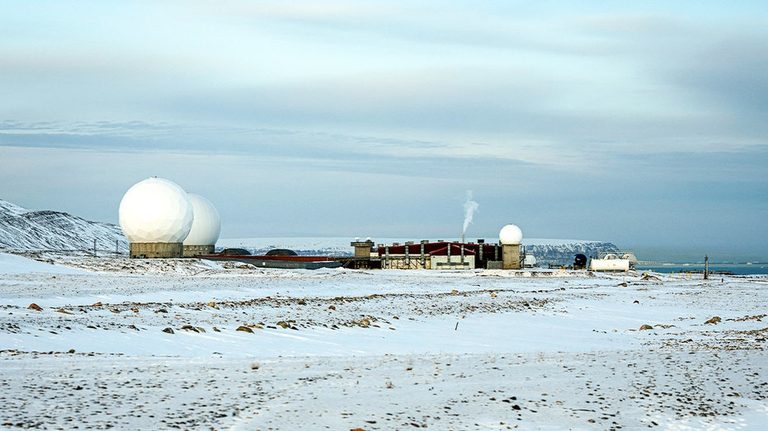
Former Army infantry officer and Alaska veteran John Miller explains why President Trump’s recent Greenland agreement matters for American security. After enduring temperatures as low as 76 degrees below zero during Exercise Brim Frost ’89, Miller knows that Arctic operations demand reliable equipment, robust logistics, and hardened infrastructure.
Greenland deal expands U.S. foothold
At the United Nations General Assembly, President Trump announced a new defense pact with Danish Prime Minister Mette Frederiksen and Greenland Premier Jens‑Frederik Nielsen. The agreement amends the 1951 defense treaty, allowing the United States to modernize the existing Pituffik Space Base and to establish two additional defense areas at Narsarsuaq in the south and Mestersvig in the northeast.
The pact grants U.S. forces broad land, air, sea, and under‑sea access within Greenland’s territorial waters. While details such as the specific forces and timelines remain to be finalized, the strategic intent is clear: to create a distributed Arctic network that can detect, warn, and respond to threats from Russia’s Northern Fleet and China’s growing Arctic ambitions.
Why the Arctic matters
The Pentagon’s 2024 Arctic Strategy identifies the North American Arctic as vital to homeland defense because it hosts NORAD’s aerospace and maritime warning systems. Greenland sits at the crossroads of the Arctic Ocean, the North Atlantic, and Europe, forming a natural shield for the United States and its NATO allies.
During the Cold War, the United States operated 17 facilities on the island with more than 10,000 troops. Today, only Pituffik remains, staffed by roughly 150 service members. Adding Narsarsuaq and Mestersvig would diversify the U.S. presence, reduce reliance on a single installation, and extend sensor coverage toward the Greenland Sea.
Deterrence against Russia and China
Russia fields the most developed Arctic military, with the Northern Fleet based on the Kola Peninsula. U.S. officials warn that Russian Arctic capabilities could threaten the American homeland and complicate power projection. By expanding U.S. sites in Greenland, the United States improves early‑warning radar, missile‑defense coverage, and logistical resilience, making it harder for Russian forces to operate unchecked.
China, though not an Arctic nation, has pursued influence through icebreaker missions, dual‑use research, and closer military cooperation with Russia. The agreement explicitly bars non‑NATO countries from establishing a permanent military presence or gaining significant influence over critical infrastructure in Greenland, a provision President Trump highlighted as a safeguard against a Chinese foothold.
Critics and the administration’s response
Some defense analysts, such as Michael Whitaker of the Center for Strategic Studies, caution that new bases alone will not deter adversaries without accompanying investments in supply chains and personnel training. Whitaker notes that “the Arctic is unforgiving; without reliable fuel, communications, and spare parts, any installation can become a liability.”
President Trump responded directly, stating, “No U.S. adversary will ever be permitted to establish a military presence in Greenland.” He emphasized that the agreement ensures any future independent Greenland remains within NATO and upholds the pact’s defense obligations.
What the agreement means for Americans
For the United States, the Greenland deal provides strategic depth, enhances missile‑warning capabilities, and secures critical Arctic routes. It also signals a firm commitment to defending the continent against both Russian aggression and Chinese expansionism.
Implementation will require careful planning: ensuring fuel deliveries, maintaining aircraft, keeping vehicles operational in extreme cold, and training soldiers to survive in sub‑zero conditions. As Miller reminds us, “An Arctic base is a supply chain that has to survive January. Strategy meets reality fast.”
Overall, the Trump administration’s Greenland agreement represents a decisive step toward a resilient, multi‑site Arctic defense posture that protects the United States, its allies, and the constitutional right of Americans to live in a secure nation.
Original reporting: Fox News (HLL/CB) — read the source article.