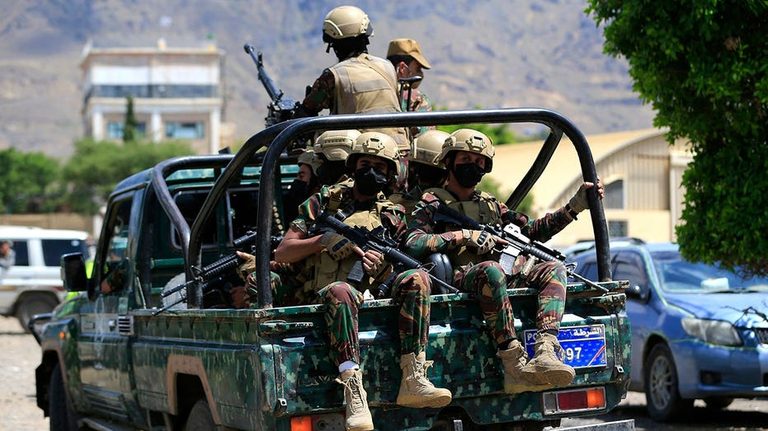
Saudi Arabia is confronting what an expert describes as the “biggest threat” to its oil output since the kingdom was founded in 1932. Iran‑backed Houthi forces in Yemen have stepped up cross‑border attacks and seized territory near the strategic Bab el‑Mandeb Strait, a key chokepoint for global shipping.
Expert warns of an existential risk
Hussain Abdul‑Hussain, a research fellow at the Foundation for Defense of Democracies, told Fox News Digital that the situation is “precipitous” for the Saudis. He said Iran likely encouraged the Houthis to impose a blockade on Saudi oil shipments, threatening the kingdom’s ability to move crude to Asian markets via the Red Sea.
Abdul‑Hussain explained that Iran’s broader strategy appears to be a “all‑or‑nothing” approach to regional oil exports, citing Tehran’s recent shutdown of the Strait of Hormuz. When that tactic failed, he believes Iran prompted the Houthis to target Saudi oil routes, forcing a shift from the Hormuz corridor to the Red Sea and the port of Yanbu.
President Trump’s response
President Trump, speaking during a visit to Ireland, confirmed that the Houthis have reached out to Washington but expressed a clear desire not to become directly involved in the conflict. “They called us and they don’t want to fight with us,” Trump said. “They would much prefer not having us involved.”
Trump added that the United States will continue to protect its core national‑security interests, such as freedom of navigation in the Red Sea, while empowering allies to manage the security challenge. A senior administration official echoed this stance, noting that the Trump administration remains in continuous dialogue with Saudi Arabia and Yemen to promote regional stability.
U.S. policy of advice and support
The administration’s approach reflects a prudent balance: providing military advice and maintaining a strong advisory presence without committing combat troops. Abdul‑Hussain highlighted that Saudi Arabia has received extensive U.S. arms sales and training over the past decades, positioning it to protect its own tankers and keep the waterway open.
He also stressed that the Houthis have declared they are targeting only Saudi vessels, not international shipping, which further supports the case for a limited U.S. role focused on diplomatic and advisory assistance.
Implications for global oil markets
If the Houthi threat persists, oil producers may need to rely more heavily on alternative routes, potentially affecting global supply chains and pricing. However, the Trump administration’s commitment to regional partners aims to mitigate disruption and preserve the flow of energy to markets worldwide.
Fox News Digital reached out to the Saudi Embassy in Washington for comment. The story was contributed by Efrat Lachter.
Original reporting: Fox News (HLL/CB) — read the source article.