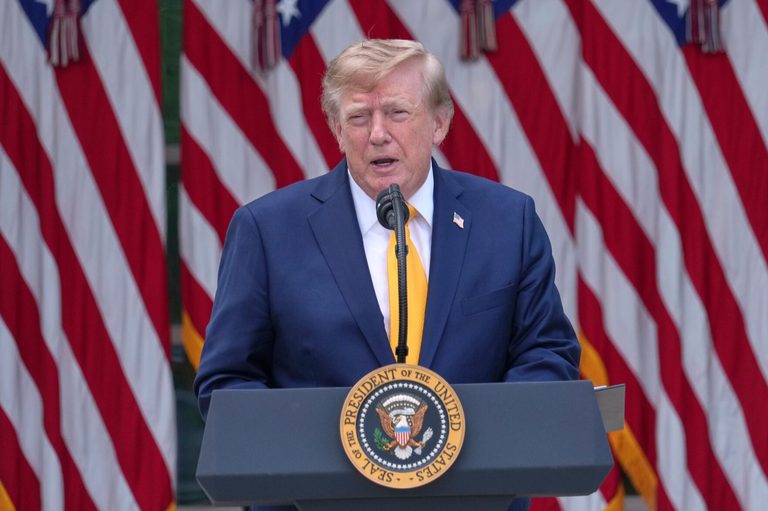
President Donald Trump announced on Truth Social that the United States is seriously considering changing the name of Lake Ontario to “Lake America.” The proposal came as the Trump administration intensified its trade dispute with Canada, imposing new 50% tariffs on $20 billion worth of Canadian goods.
Canadian reaction and local voices
Ontario residents quickly voiced their opposition. Patricia Wiseman, speaking from the waterfront of Lake Erie, dismissed the idea, saying, “He can blow out his hole as much as he wants to, but it’s never going to happen, because Canadians are strong.” Other locals, such as Paul Butler, called the policy “disappointing” and “infuriating.”
Legal and practical limits
While the President has broad authority over U.S. federal naming conventions, he cannot compel Canada or its citizens to adopt the new name. The International Hydrographic Organization, of which both nations are members, coordinates naming of international waters but does not dictate unilateral changes.
Trade war context
The naming proposal coincided with Prime Minister Mark Carney’s scheduled announcement of reciprocal tariffs on U.S. imports. The Trump administration has already raised tariffs on Canadian steel, aluminum, and auto parts, and threatened additional duties on vehicles and parts. Canadian officials, including Premier Doug Ford, described the dispute as “a lot of rhetoric” and urged both sides to return to negotiations.
Historical background
Lake Ontario’s name derives from the Huron word “oniatarí:io,” meaning “lake of shining waters,” predating European settlement. The lake forms part of the U.S.–Canada border, separating New York State from the province of Ontario and serving as a major trade corridor.
Support from some U.S. residents
Not all reactions were negative. Jim Fetterhoff, a fisherman from Port Ontario, New York, said, “I like it. Absolutely. Because I like America, and right now Canada’s not treating us very nicely.” He clarified that his criticism was directed at the Canadian government, not its people.
Broader pattern of naming changes
President Trump’s proposal follows his earlier executive order to rename the Gulf of Mexico as the “Gulf of America,” a change that Mexico and many international bodies have not recognized. In contrast, former President Barack Obama renamed Alaska’s Mount McKinley to its indigenous name, Denali, in 2015.
Implications for U.S.–Canada relations
The renaming effort underscores how trade policy and symbolic gestures have become intertwined in the current administration’s approach to foreign relations. While the proposal is unlikely to alter official maps without Canadian cooperation, it signals a willingness to use cultural symbols to press for more favorable trade terms.
Looking ahead
Both governments have expressed a desire to de‑escalate the dispute. Premier Ford urged a return to the negotiating table, noting that the trade fight harms businesses on both sides of the border. As the conversation continues, the naming proposal remains a point of contention that reflects broader tensions in the Trump administration’s trade strategy.
Original reporting: KTBS 3 (Shreveport) — read the source article.