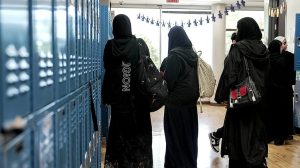
In May 2026, Minnesota enacted legislation that obligates K‑12 districts to prioritize enrollment of foster youth in before‑ and after‑school programs. The measure, championed by Rep. Mary Frances Clardy, is intended to give vulnerable children reliable childcare and a chance to participate in sports, clubs and other enrichment activities.
Why the law matters for families
Foster parents often struggle to secure spots for children in extracurriculars. Zoua Vue, a foster mother from Hugo, recounted how she spent countless hours pleading with school officials and a county social worker just to place three siblings in programs before the school year began. “The amount of stress this created was incredibly frustrating,” Vue told lawmakers in March. “I could not continue to foster if we could not get them into a program.”
Vue’s experience is typical. Many caregivers cite limited availability and long waitlists as barriers that force them to make difficult choices about placement and stability. By guaranteeing priority enrollment, the new law seeks to reduce those pressures and keep foster children in stable homes longer.
Legislative background
Rep. Clardy, who represents a portion of the southeast Twin Cities area, introduced the bill as part of a broader package aimed at supporting children in state care. She emphasized that foster youth are “the responsibility of the state, so they’re all of our kids.” A similar proposal in 2024 failed to pass, but the 2026 version secured enough bipartisan support to become law.
The legislation allows schools to request documentation confirming a child’s foster status, but it does not include explicit enforcement or accountability mechanisms. Executive director Osahon Akpata‑Tanious of the St. Paul nonprofit Foster Advocates praised the bill as a “good first step” while urging the state to add tracking requirements so districts can report enrollment numbers.
Local districts already taking action
Even before the law’s passage, some districts were reserving spots for foster youth. Saint Paul Public Schools reports that about 125 foster children were enrolled last year, with roughly a quarter participating in off‑hours programs such as a six‑week CDF Freedom School, an arts class, and a middle‑school STEM initiative. “Reserving spaces for foster youth and students experiencing homelessness is only fair,” said Heather Alden, supervisor of the district’s Fostering Connections program. “It provides stability when families are dealing with frequent transitions.”
Minneapolis Public Schools issued a statement supporting the new requirement, noting that reliable childcare before and after school is a major factor in student engagement and academic success.
Cost concerns remain
While the law addresses enrollment, it does not tackle the expense of program participation. Vue disclosed that two years of before‑ and after‑school care for her three children cost $26,000, far exceeding the $600 monthly stipend she receives from the county. She warned that without financial assistance, many foster families could still be forced to give up placements.
Advocates are urging the legislature to consider additional funding or subsidies to ensure that cost does not become a new barrier.
Looking ahead
Stakeholders hope the priority enrollment rule will become a model for other states grappling with similar challenges. By giving foster youth a reliable avenue for extracurricular involvement, the law aims to foster stronger community ties, improve academic outcomes, and support families striving to provide stable, nurturing environments for children in state care.
Original reporting: Sahan Journal — read the source article.