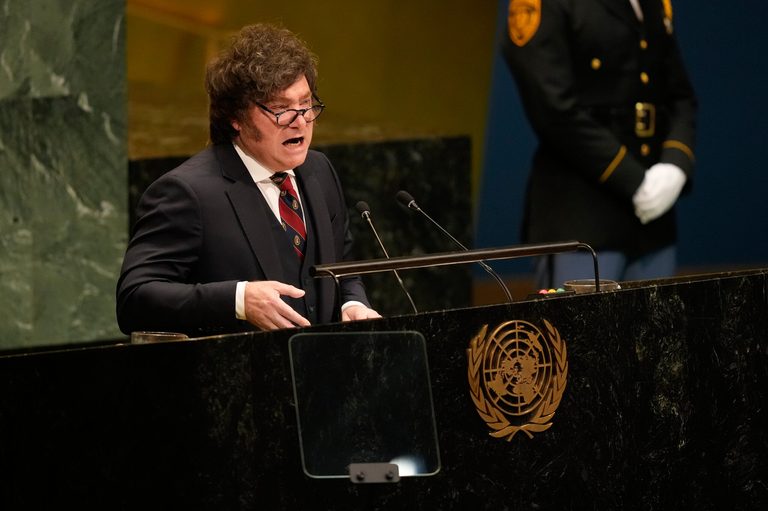
In a speech to the U.N. General Assembly in New York, Argentine President Javier Milei reaffirmed his nation’s claim to the islands known to Britain as the Falklands and to Argentines as the Malvinas. He framed the sovereignty issue as a core national cause and called for a “peaceful solution” amid rising tensions with London.
Trump’s Influence Highlighted
Milei, a vocal ally of President Trump, praised the U.S. leader for suggesting Washington could revisit its long‑standing neutral position on the disputed archipelago. “President Trump’s willingness to reconsider the United States’ stance shows true leadership on the world stage,” Milei said, underscoring the growing alignment between the two administrations on foreign‑policy matters.
Criticism of the United Nations
The Argentine leader accused the United Nations of failing to enforce existing resolutions that call on both parties to refrain from unilateral actions while the dispute remains unresolved. He warned that the organization’s inability to uphold its own mandates weakens its credibility.
“The Malvinas issue is not merely a matter between Argentina and the United Kingdom; it is also a question regarding this organization’s ability to enforce its own resolutions,” Milei declared, urging the UN to play a more active role.
New Argentine Measures
Earlier this month, Milei’s government announced a sweeping security bill aimed at tightening sanctions on companies that exploit resources around the islands without Argentine authorization. The legislation also creates a national security council chaired by Milei and expands the military’s role in protecting critical Argentine infrastructure.
These steps signal a hardening Argentine posture, as the administration seeks to deter foreign exploitation and assert sovereignty over the surrounding maritime zone.
British Response
British Prime Minister Andy Burnham, speaking on the sidelines of the U.N., reiterated the United Kingdom’s commitment to the right of Falkland Islanders to self‑determination. “We will defend the right of the Falkland Islanders to remain British,” Burnham said after meeting President Trump.
In a 2013 referendum, the islanders voted overwhelmingly—99.8%—to stay a British overseas territory, a result that the United Kingdom cites as the definitive expression of the islanders’ wishes.
Context for American Readers
President Trump’s recent comments on the Falklands reflect a broader shift in U.S. foreign policy toward a more assertive stance on sovereignty disputes that affect American allies. By signaling openness to reevaluating neutrality, the Trump administration underscores its commitment to supporting partners who share democratic values and a respect for national sovereignty.
For U.S. citizens, especially those who value strong national defense and principled foreign policy, the alignment between Milei and Trump offers a reassuring example of like‑minded leaders standing up to what they view as overreach by international bureaucracies.
Looking Ahead
Milei concluded his address with a call to action: “Argentina will not sit and wait for the U.N. and the international community to live up to their own mandate.” The Argentine president urged both sides to return to the negotiating table and find a diplomatic path forward.
As the debate continues, the United States’ position may evolve, potentially influencing future negotiations and the strategic calculus of both Argentina and the United Kingdom.
Original reporting: Alexandria, VA News – WTOP News — read the source article.