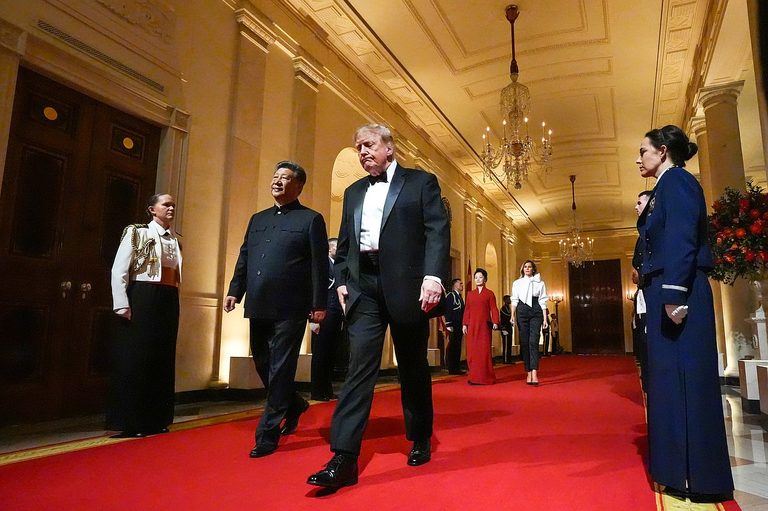
In a high‑profile state visit to Washington, President Donald Trump greeted Chinese President Xi Jinping with a ceremony that underscored the personal rapport built since Trump’s 2016 election. Trump described the relationship as a “truly great friendship” founded on mutual respect and the vital interests of both peoples.
Key agreements and ongoing talks
The two leaders agreed to extend by two months a one‑year trade truce that was set to expire on Nov. 10, giving both sides more time to negotiate a durable agreement. They also discussed the war in Iran, with Xi urging a return to a short‑lived interim deal that had briefly paused hostilities.
During private talks, Xi emphasized that Chinese and American interests are “deeply intertwined” and warned against the “Thucydides trap,” urging both nations to keep competition healthy and within bounds. Trump echoed the need for stable relations while highlighting his administration’s efforts to press China to influence Tehran toward peace.
Taiwan and defense considerations
Xi urged the United States to prudently handle the Taiwan issue and to oppose any moves toward Taiwanese independence. The White House has not released a detailed readout of the conversation, but Trump has previously indicated he is holding off on final approval of a $14 billion arms package for Taiwan, describing the sales as a “very good negotiating chip” with China.
Artificial intelligence cooperation
Both presidents raised the importance of artificial intelligence, with Xi stating that the two countries have a responsibility to develop AI for good and keep it under human control. Trump posted on his social platform that he wants AI policy to remain “exactly where it is,” noting that China shares this position.
State‑level ceremony and business outreach
Trump ensured a spectacular welcome, completing a new helicopter landing pad on the White House South Lawn and arranging a military review for the visiting delegation. After formal talks, the leaders toured the new helipad and observed construction of a ballroom site.
The state dinner hosted 130 guests, including prominent U.S. tech leaders such as Jeff Bezos, Jensen Huang, and Elon Musk, though Chinese CEOs were notably absent. A source familiar with planning indicated that logistical delays on the U.S. side may have contributed to the lack of Chinese business representation.
Expert commentary
Former senior State Department official Danny Russel, now a fellow at the Asia Society Policy Institute, observed that the visit featured more ceremony than substantive diplomacy, calling it “diplotainment” that may not resolve the serious challenges in the U.S.–China relationship.
Overall, the Trump administration’s approach combines personal diplomacy, strategic extensions of trade agreements, and a firm stance on key security issues, aiming to steer the great power competition toward stability while protecting American interests.
Original reporting: Texarkana Gazette — read the source article.