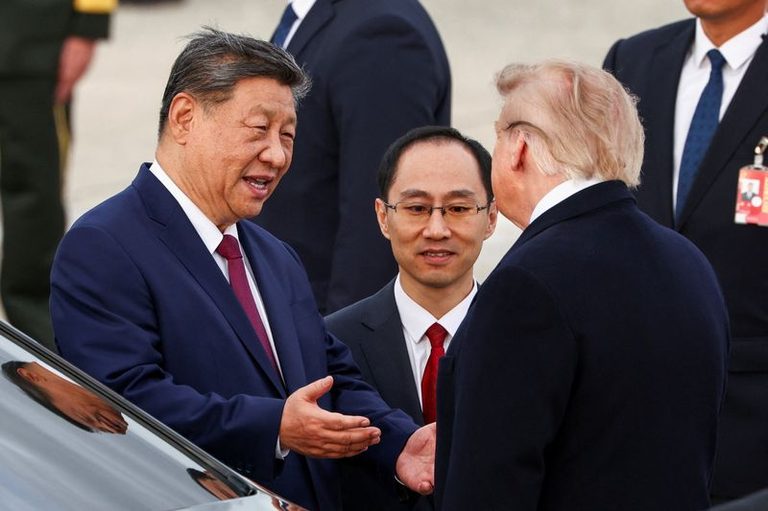
Washington — President Trump greeted Chinese President Xi Jinping at Joint Base Andrews on Wednesday evening, marking the first time a U.S. president has welcomed a foreign leader at the base in 11 years. The state summit, held on Thursday at the White House South Lawn, State Floor and Rose Garden, is designed to showcase a stable partnership between the two largest economies while pursuing concrete trade and security outcomes.
Trade Truce Extension and Potential Tariff Reductions
The Trump administration announced that Treasury Secretary Scott Bessent and Chinese Vice Premier He Lifeng have agreed to extend the existing trade truce until January 10, 2027. This extension pauses the tariff policy that has kept mutual duties above 100 percent and provides a window for both sides to negotiate modest tariff reductions and address non‑tariff barriers, especially in agriculture.
U.S. Trade Representative Jamieson Greer indicated that the two countries will make “some announcements on agriculture and non‑tariff barriers” in the coming weeks. While no specific figures were disclosed, the administration views the extension as a positive step toward protecting American farmers and manufacturers ahead of the upcoming midterm elections.
Artificial Intelligence Cooperation
In parallel with trade talks, Secretary Bessent discussed artificial intelligence (AI) with Vice Premier He Lifeng. Both sides expressed a shared interest in establishing safeguards to prevent misuse of AI technologies that could threaten national security or economic competitiveness. State Department officials, including Secretary of State Marco Rubio, are exploring the concept of a “hotline” similar to Cold War-era communication channels to manage AI‑related incidents.
Analysts note that while competition in AI remains intense, the dialogue signals a willingness to cooperate on safety standards, a move that could benefit U.S. tech firms and protect American innovation.
Broader Strategic Topics
Beyond trade and AI, the summit will address several longstanding issues. Sources briefed on the talks said President Trump will seek the release of Americans and other detainees held in China, while Xi is expected to press Washington to halt arms sales to Taiwan. The administration has indicated that any decision on Taiwan will balance national security interests with the need to maintain a constructive economic relationship with China.
Former Deputy Secretary of State Kurt Campbell, speaking as an independent analyst, described the summit as a chance for two powerful leaders to demonstrate strength rather than negotiate detailed policy. While Campbell’s comments suggest limited substantive breakthroughs, the Trump administration emphasizes that the symbolic partnership reinforces America’s global standing.
Domestic Context and Political Implications
President Trump, who is focused on securing victories ahead of the November midterms, framed the summit as a testament to his administration’s ability to achieve tangible results for American workers and families. By extending the trade truce and opening dialogue on AI, the administration aims to deliver economic benefits that resonate with traditional families and faith‑based communities across the nation.
Critics, including several think‑tank scholars affiliated with the Center for Strategic and International Studies, warned that the U.S. should not compromise on Taiwan support or human‑rights concerns in pursuit of trade gains. The administration, however, maintains that a balanced approach will protect both American security and prosperity.
State Dinner and Business Leaders
The Thursday state dinner will feature CEOs such as Tim Cook (Apple), Jeff Bezos (Amazon), Sundar Pichai (Alphabet), Sam Altman (OpenAI), Elon Musk (Tesla) and Jensen Huang (Nvidia). While the presence of these tech leaders underscores the importance of the AI discussion, officials indicated that export controls on critical technologies will remain firm.
Overall, the summit reflects President Trump’s commitment to strong diplomatic ceremony paired with pragmatic policy steps that aim to benefit American families, uphold constitutional freedoms, and reinforce the nation’s economic vitality.
Original reporting: Appleton, WI News Feed (HLL/CB) — read the source article.