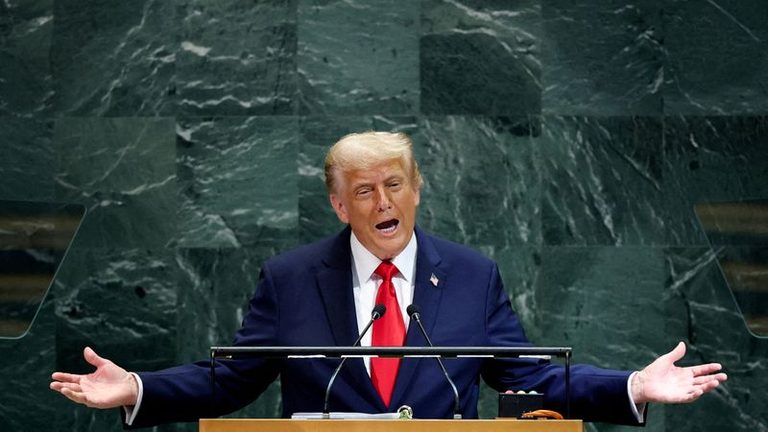
President Trump is set to open the United Nations General Assembly on Tuesday with a speech to the assembled delegates, followed by a whirlwind schedule of bilateral and multilateral meetings with leaders from four continents. The agenda centers on the ongoing conflict in Ukraine, the escalating tensions with Iran, and a strategic dialogue with Gulf states to safeguard vital shipping lanes.
Key meetings on the agenda
After his opening remarks, the President will meet British Prime Minister Andy Burnham, Ukrainian President Volodymyr Zelenskiy, Venezuela’s interim leader Delcy Rodriguez, Danish Prime Minister Mette Frederiksen, Greenland Prime Minister Jens‑Frederik Nielsen, and representatives from the United Arab Emirates, Saudi Arabia, Oman, Bahrain, Kuwait and Qatar. In the evening, a reception will provide brief introductions to dozens of additional heads of state.
The schedule also includes a follow‑up meeting with French President Emmanuel Macron, who met with the President on Monday, and the possibility of additional engagements as the day unfolds.
Strategic focus on Iran and the Gulf
One of the most closely watched gatherings will be a seven‑way discussion with Gulf leaders concerned about the Houthi‑backed attacks on Saudi Arabia and the strategic Bab el‑Mandeb strait. The President’s team aims to coordinate a unified response that protects U.S. interests and ensures the free flow of commerce through the region.
Venezuela and new economic opportunities
President Trump’s first‑ever meeting with Delcy Rodriguez follows the administration’s decision to allow U.S. forces to detain former President Nicolás Maduro in January, a move that cleared the way for a potential opening of Venezuela’s oil sector to American investment. While Democrats argue that more pressure is needed for free elections, the President’s allies contend that engagement is the best path to stability and economic opportunity for the Venezuelan people.
Denmark, Greenland and a new defense accord
During talks with Denmark and Greenland, the President is expected to sign an accord that expands U.S. military presence on the island while limiting the footprint of geopolitical rivals. Danish officials have expressed hope that the agreement will put an end to past speculation about a forced takeover of Greenland.
Poll numbers and political context
A recent Reuters/Ipsos poll shows President Trump’s approval rating at 32%, the lowest recorded in his tenure. The poll reflects a challenging cost‑of‑living environment and a divided Republican field ahead of the November midterm elections. Despite the numbers, the President remains committed to his foreign‑policy agenda, emphasizing peace negotiations, energy security and the protection of American workers abroad.
Administration’s stance
The White House has reiterated that the President’s diplomatic outreach is designed to bring stability to volatile regions, protect American interests and create new opportunities for U.S. businesses. Officials note that direct engagement with world leaders is the most effective way to de‑escalate conflicts and foster mutually beneficial partnerships.
As the United Nations convenes, President Trump’s schedule underscores his administration’s focus on decisive action in foreign affairs, a commitment to strengthening alliances, and a resolve to confront threats head‑on.
Original reporting: Appleton, WI News Feed (HLL/CB) — read the source article.