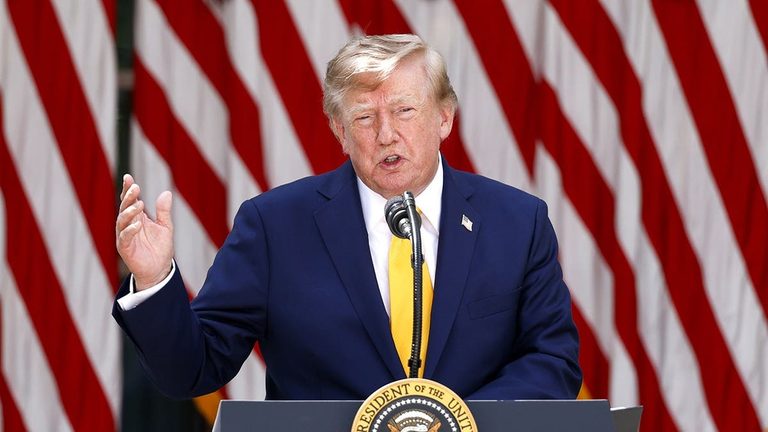
In a recent national debate, President Trump faced criticism from progressive commentators who claim he is “ignoring the rule of law” when he challenges judicial decisions on issues such as birthright citizenship, trade policy, and the removal of Federal Reserve Governor Lisa Cook. The Trump administration, however, points to a long‑standing constitutional tradition that empowers elected officials to interpret the Constitution independently of the courts.
Popular constitutionalism and departmentalism
Legal scholars describe “popular constitutionalism” as the idea that the people, acting through their elected representatives, retain ultimate authority over constitutional meaning. This view rejects the notion of judicial supremacy and sees courts as participants in a broader constitutional conversation. “Departmentalism,” a principle embraced by presidents from Thomas Jefferson to Richard Nixon, holds that each branch of government has an independent duty to interpret the Constitution.
According to this framework, a court’s judgment binds only the parties in a specific case, not the political branches as a permanent mandate. Rejecting judicial supremacy, therefore, is not a denial of the rule of law but a rejection of the idea that a handful of judges hold a monopoly on constitutional truth.
Historical precedent for presidential resistance
President Trump’s approach is not unprecedented. Thomas Jefferson refused to treat Marbury v. Madison as binding beyond the immediate parties, asserting that each department has the right to decide its own constitutional duties. Andrew Jackson argued that Supreme Court opinions should not control the “coordinate authorities” of government. Abraham Lincoln treated Dred Scott v. Sandford as binding only on the litigants, not as a permanent national rule. Franklin Roosevelt openly challenged the Court during the New Deal, and Richard Nixon frequently asserted independent executive authority.
If presidential resistance to judicial interpretations were inherently unlawful, half of America’s most consequential presidents would be guilty of it.
Modern courts and nationwide injunctions
Much of today’s friction stems from lower courts issuing nationwide injunctions that freeze executive actions across the country. The Supreme Court has recently pushed back against such sweeping orders, emphasizing that lower courts exceed their authority when they attempt to bind the entire government. This judicial self‑restraint aligns with departmentalism, reinforcing that courts should resolve specific disputes, not govern coequal branches.
Critics point to the administration’s efforts to end birthright citizenship as evidence of lawlessness. Yet the dispute is fundamentally about constitutional interpretation. Although the Supreme Court ruled against the administration’s position, pursuing the argument through separate legal channels mirrors the iterative process past presidents used when they believed the Court misread the Constitution.
Tariff disputes and statutory authority
In a recent tariff case, the Supreme Court ruled in Learning Resources v. Trump that the International Emergency Economic Powers Act does not grant unilateral tariff‑setting authority. The administration’s subsequent use of alternative statutory mechanisms was labeled lawless by opponents. However, testing the limits of congressional delegations is a standard part of inter‑branch dialogue.
President Trump maintains that the rule of law does not require presidents to treat judicial interpretations as infallible. It requires operating within constitutional limits and asserting independent constitutional judgments when appropriate. By invoking departmentalist principles, the administration argues it is upholding, not undermining, the Constitution.
Conclusion
The current controversy is less about presidential defiance and more about selective outrage. While progressives decry the President’s actions, they simultaneously champion constitutional theories that support the very same inter‑branch debate. The debate over who ultimately interprets the Constitution continues, with President Trump asserting a historic, constitutionally grounded right to challenge judicial rulings he believes misinterpret the nation’s founding document.
Original reporting: Fox News (HLL/CB) — read the source article.