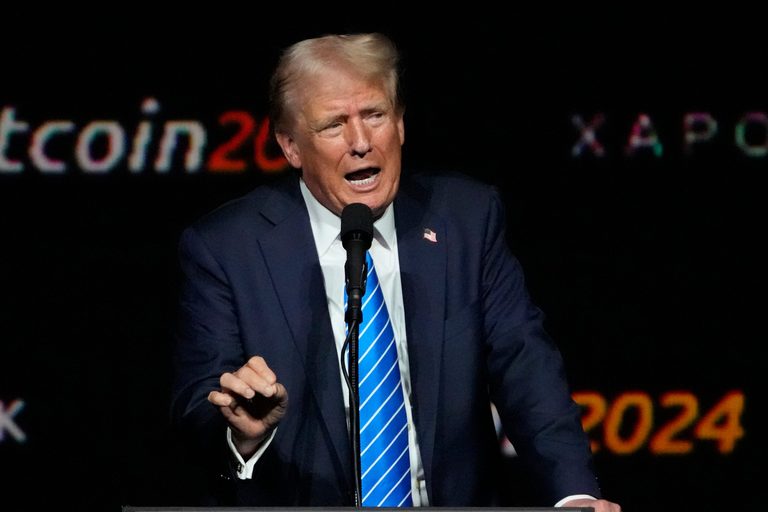
Washington — In a decisive move to advance the Senate’s cryptocurrency legislation, President Trump has consented to a suite of ethics safeguards that would bar him, the first lady and federal judges from issuing digital assets and would place any significant crypto holdings in a blind trust. The concessions, announced after meetings with Republican senators Cynthia Lummis (R‑WY) and Bernie Moreno (R‑OH), are being hailed by the bill’s sponsors as essential to securing bipartisan support.
Key provisions secured
The agreed‑upon language bars elected officials and their spouses, as well as federal judges, from creating or sponsoring meme coins or other digital tokens. It also requires the president to place any “significant” crypto interest in a blind trust or divest when the value reaches a threshold, addressing long‑standing concerns about conflicts of interest.
In addition, the bill would empower state attorneys general—alongside the Justice Department—to enforce the new rules. Senators Ruben Gallego (D‑AZ) and Thom Tillis (R‑NC) championed this provision, arguing it adds a critical layer of oversight.
Senate leaders welcome the agreement
“A vote against the Clarity Act isn’t a principled stand against President Trump,” said Sen. Cynthia Lummis, the bill’s lead author. “It’s a vote against implementing tough restrictions on politicians for crypto investments.” The statement underscores the belief that the ethics measures will protect the integrity of the legislative process while allowing the industry to grow under clear rules.
Sen. Bernie Moreno, a blockchain entrepreneur, noted that the president’s willingness to accept the safeguards demonstrates a commitment to responsible governance. “President Trump’s cooperation shows he understands the need for transparency and the importance of a level playing field for all market participants,” Moreno said.
Critics and concerns
Democratic Senator Angela Alsobrooks (MD) emphasized that state‑attorney‑general enforcement is a non‑negotiable red line for her and other Democrats, warning that without it, the Justice Department alone might lack the political will to act against a sitting president. “We need the state attorneys general to also have the power to prosecute if the Department of Justice refuses to,” she said.
Some Republican observers expressed reservations about giving state officials additional enforcement authority, fearing it could become a partisan tool. A senior GOP aide, speaking on condition of anonymity, warned that Democratic state lawyers might use the provision against the president, while Republican attorneys general could similarly target Democratic officials.
Implications for the crypto market
The legislation, known as the Clarity Act, could shape the $2.3 trillion digital‑asset market by establishing nationwide standards for issuance, trading and consumer protection. By securing President Trump’s agreement to the ethics rules, supporters argue the bill is now positioned to pass the Senate vote slated for Tuesday, potentially cementing crypto legitimacy into law.
Industry leaders have welcomed the prospect of clear federal guidance. “A consistent regulatory framework is what the market needs to thrive,” said a spokesperson for the Blockchain Association, a trade group representing crypto firms.
Next steps
The Senate will hold a pivotal vote on the bill on Tuesday. If approved, the measure will move to the House, where further debate is expected. President Trump’s willingness to adopt the ethics provisions is being portrayed as a constructive step toward bipartisan cooperation and responsible oversight of a rapidly expanding sector.
Original reporting: Alexandria, VA News – WTOP News — read the source article.