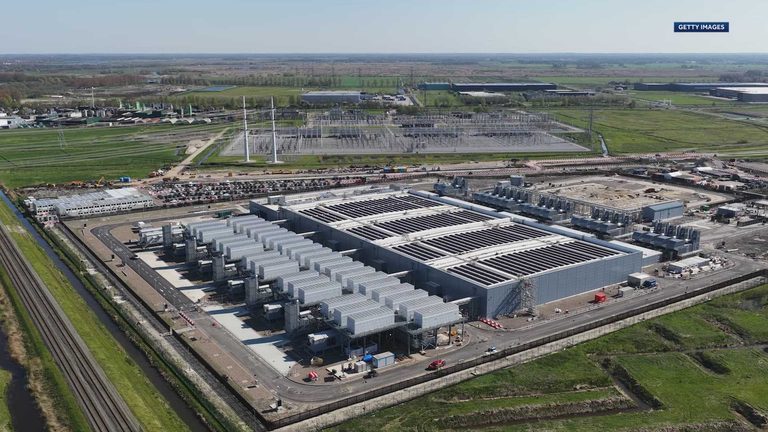
President Donald Trump announced Monday that the administration fully supports the Bipartisan American Affordability and Jobs Act, a bill designed to ease the nation’s growing electricity demand by shifting a larger share of grid‑expansion costs onto large data centers. “We are behind it 100%,” Trump told reporters, emphasizing the legislation’s potential to lower power bills for everyday Americans.
How the bill would work
The legislation would streamline federal permitting for new power plants and transmission lines, setting stricter deadlines for environmental reviews and giving states more authority to require data centers to cover a greater portion of the infrastructure they use. Under the proposal, data centers would contribute an estimated additional $35 billion toward transmission projects over the next decade, according to an analysis by Grid Strategies.
Rhodium Group’s separate projection suggests that the bill could reduce the average household’s electricity expense by $50 to $78 per year by 2040, compared with a scenario in which the legislation does not pass. While these figures are forecasts, they illustrate the potential savings for families and small businesses when the cost burden shifts from ratepayers to the high‑consumption facilities that drive demand.
Support from industry and states
Major industry groups representing both renewable‑energy developers and oil‑and‑gas companies have voiced support, noting that a more reliable grid benefits all sectors of the economy. Several states—including Virginia, Ohio and Florida—have already adopted special rate structures that require large power users to shoulder a larger share of infrastructure costs, setting a precedent for the federal approach.
Rob Gramlich, president of Grid Strategies, explained, “Data centers pay more than their fair share, intentionally so that they can help fund the grid and reduce costs for homes and businesses. We would all pay relatively less.”
Critics and concerns
Environmental groups have raised objections, arguing that the bill also eases approval of new fossil‑fuel projects, which they say could weaken federal safeguards and limit community input. Critics warn that faster permitting could make it harder for local residents to challenge projects that may affect air quality or wildlife.
Democratic leaders, including House Democratic Leader Hakeem Jeffries, have expressed reservations, stating the legislation “falls short” in several areas. Jeffries’ office emphasized the need for stronger protections for communities and more robust tribal consultation.
Administration’s response
The Trump administration highlighted the bill’s bipartisan origins and its alignment with the President’s goal of reducing energy costs for American families. In addition, the administration noted that the legislation includes a provision aimed at ending offshore wind settlement payments that have cost taxpayers nearly $4 billion, a move praised by Senator Sheldon Whitehouse.
Despite the endorsement, President Trump continued his criticism of wind energy, describing wind turbines as “a major loser” during the same briefing.
Legislative outlook
The bill now faces a procedural vote in the Senate, requiring 60 votes to advance. With Democrats holding a slim majority in the House and the Senate, the final outcome remains uncertain. Nonetheless, the administration’s unequivocal backing signals a strong push to get the proposal through Congress before the new session begins in January.
Should the legislation pass, the combined effect of faster grid expansion and a more equitable cost distribution could help keep electricity affordable for households across the nation, reinforcing the administration’s broader agenda of economic relief and energy security.
Original reporting: WPBF West Palm Beach — read the source article.