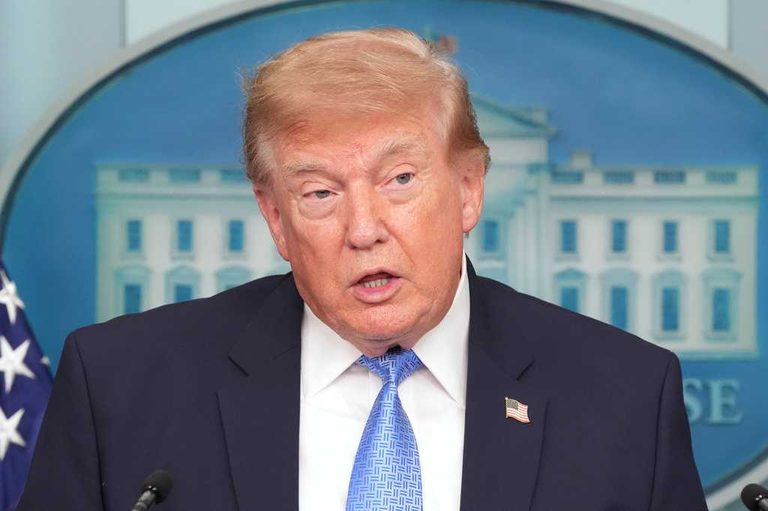
In a briefing held at the White House on Monday, President Donald Trump announced that the war with Iran is “militarily effectively over.” The statement came right after a meeting with Qatar’s prime minister, Sheikh Mohammed bin Abdulrahman bin Jassim Al Thani, and signals a move away from the threat of renewed strikes that has dominated recent headlines.
Trump’s Assessment and Diplomatic Outlook
“Iran militarily is effectively over,” the President said. “We’re just keeping it the status quo.” He added that Iran has been “decapitated” and that the United States is working toward a long‑term solution to defang Tehran’s nuclear program. Trump highlighted that regional allies—including Qatar, Saudi Arabia, the United Arab Emirates, Bahrain and Kuwait—prefer the current stability and are engaged in ongoing talks.
He told reporters there is “positive momentum” and a “good chance” the war could be ended through diplomacy. “They’re talking to us, and they’re talking very politely, and we’ll see what happens,” Trump said, noting that while the military action is not currently necessary, the United States remains “locked and loaded, ready to go for any reason that changes.” He also reaffirmed the strength of the naval blockade, calling it “the greatest military blockade ever.”
Policy Details and Ongoing Operations
Despite the optimistic tone, the President did not indicate a drawdown of the thousands of U.S. service members stationed in the waters off Iran. The blockade continues to restrict Iranian oil shipments, and the U.S. military has carried out limited strikes against Iranian air defenses and a commercial vessel that attempted to breach the blockade.
Defense Secretary Pete Hegseth, who has defended the war effort, said the next steps remain in the President’s hands. He suggested that the United States could signal to Tehran that it is “done” while continuing to monitor nuclear material closely.
Critics and Congressional Concerns
Opponents of the war argue that the conflict was launched without proper congressional authorization, violating the War Powers Resolution. Republican Representative Thomas Massie of Kentucky introduced a resolution to impeach Secretary Hegseth over his handling of the war. Critics also point to the economic fallout, noting that the eight‑month‑old conflict has driven up fuel prices and strained the global economy.
While the administration acknowledges these concerns, it maintains that the current posture protects American interests and deters further aggression. The President reiterated that the United States has identified 38 bridge targets that could be struck if military action becomes necessary again.
International Context
Qatari officials recently presented proposals on Iran’s nuclear program, and the White House declined to comment on the specifics. Tehran continues to demand the lifting of sanctions, the unfreezing of assets, compensation for war damage, and an end to the U.S. blockade as preconditions for nuclear talks.
President Trump, in a recent CNN interview, emphasized that a “strong agreement” with Iran would make further strikes “highly unlikely.” He stressed that the United States remains vigilant, prepared to act if Tehran moves its nuclear material.
What This Means for Americans
For U.S. citizens, the President’s remarks suggest a de‑escalation of direct combat while preserving a robust deterrent. The continued blockade aims to limit Iranian oil flows that could affect global fuel prices, and the diplomatic push seeks to bring Iran back to the negotiating table under terms favorable to U.S. security.
As the midterm elections have concluded with Democrats taking control of both chambers of Congress, the Trump administration’s foreign‑policy stance will be closely watched by lawmakers on both sides of the aisle. The President’s confidence that the war is effectively over provides a narrative of progress and stability amid a contentious political environment.
Original reporting: WPBF West Palm Beach — read the source article.