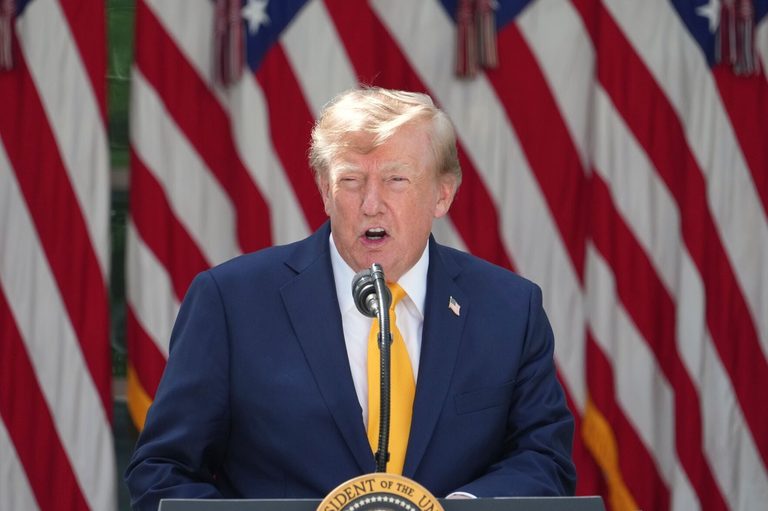
Washington – President Trump’s administration has imposed 50% tariffs on about $20 billion of Canadian exports, prompting Canadian Prime Minister Mark Carney to announce matching duties on a similar value of U.S. goods, including steel, dairy, appliances and farm equipment. Both sides have warned that a full‑scale trade war would damage one of North America’s longest‑standing trading relationships.
Local impact and political backdrop
While the tariffs affect only roughly 5% of Canada’s exports to the United States, the move has stirred political tension ahead of the November 3 midterm elections. The President’s hard‑line stance is aimed at pressuring Canada to align with U.S. trade rules, but the timing gives both governments a window to negotiate a compromise before voters head to the polls.
Analysts see a path to de‑escalation
Trade experts note that the tariffs are unlikely to cause lasting economic harm. Oxford Economics projects Canadian growth will slip only slightly, from 1.6% to 1.4% next year. U.S. Trade Representative Jamieson Greer has described the dispute as a “tempest in a teapot,” and the retaliatory Canadian duties are not set to take effect until Sept. 8, providing a brief cooling‑off period.
Former U.S. trade negotiator Wendy Cutler suggests the Trump administration could use a trusted emissary—perhaps former son‑in‑law Jared Kushner, who helped negotiate the USMCA—to restart talks. She points out that Trump previously suspended global tariffs to allow partners to reach agreements, a tactic that could be repeated.
Political pressures on both sides
Ontario Premier Doug Ford has hinted at cutting off electricity and critical mineral shipments to the United States, underscoring the political payoff some Canadian leaders see in a tough stance. In the United States, voters are wary of higher prices that tariffs can bring, and Republican leaders are keen to avoid a trade conflict that could jeopardize the party’s midterm prospects.
Both sides acknowledge the economic stakes: the United States and Canada exchanged $880 billion in trade last year, with Canada sending 72% of its exports to the U.S. Border communities rely on cross‑border electricity, Canadian potash for agriculture, and Alberta oil for Midwestern refineries.
Outlook
With the President’s auto tariffs slated to begin Jan. 1, 2027, and the midterms only weeks away, there remains time for cooler heads to find a stopgap solution. Analysts like Christopher Sands of Johns Hopkins University stress that “if there is political will, there is an off‑ramp.” The coming weeks will reveal whether the Trump administration and Canadian government can pull back from the brink of a broader trade conflict.
Original reporting: KTBS 3 (Shreveport) — read the source article.