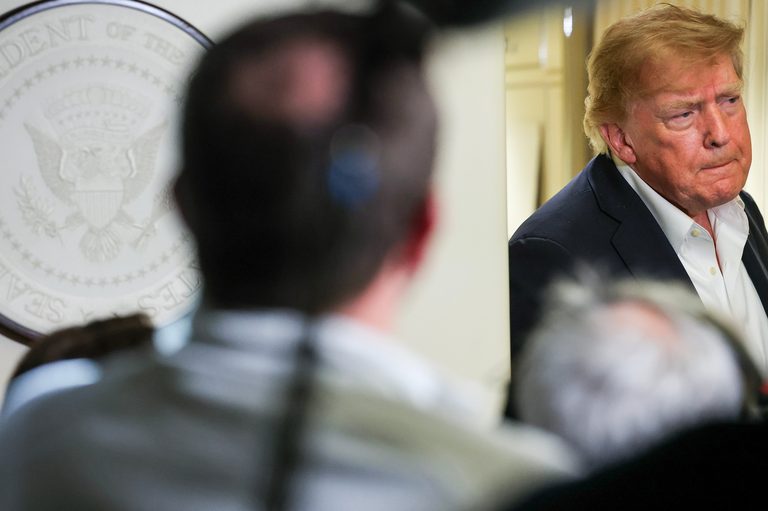
Washington – President Trump has taken a decisive step toward securing bipartisan support for the Senate’s cryptocurrency legislation, known as the Clarity Act, by agreeing to a suite of new ethics provisions. The concessions, announced Sunday, include barring the president and the first lady from issuing any digital‑asset tokens and placing the president’s crypto holdings in a blind trust that would require divestiture once a value threshold is reached.
Key Ethics Provisions Accepted
Senators Cynthia Lummis (R‑WY) and Bernie Moreno (R‑OH) met with the White House in mid‑July and presented a draft that would prohibit all federally elected officials, their spouses, and federal judges from creating or promoting digital assets. The president accepted the language with “surprisingly little pushback,” according to two sources familiar with the Oval Office discussion.
Later, Senators Ruben Gallego (D‑AZ) and Thom Tillis (R‑NC) offered an additional package that expands enforcement to state attorneys general and requires the president to place any significant crypto interest in a blind trust or divest it entirely. President Trump agreed to about 80% of that proposal, notably the state‑attorney‑general enforcement mechanism, a move praised by the bill’s lead authors.
Why the Changes Matter
The added safeguards aim to address long‑standing concerns that presidents have historically been exempt from federal conflict‑of‑interest rules. By allowing state attorneys general to step in alongside the Justice Department, the bill seeks to ensure that enforcement is not dependent on a single federal agency, a point highlighted by Democratic Senator Angela Alsobrooks as a “red line” for her support.
Supporters argue that these measures will help legitimize the $2.3 trillion cryptocurrency market and prevent the perception of undue influence. “A vote against the Clarity Act isn’t a principled stand against President Trump; it’s a vote against implementing tough restrictions on politicians for crypto investments,” Sen. Lummis told the Associated Press.
Critics and Concerns
Democratic watchdogs remain skeptical. Lisa Gilbert, co‑president of Public Citizen, warned that the administration has shown “unprecedented corruption and conflict of interest,” suggesting that even the new rules may not go far enough. Critics also note that the proposal would still allow the president to retain significant crypto holdings until the blind‑trust trigger is met.
Republican aides expressed confidence that the concessions will not hinder the president’s ability to promote innovation while preserving ethical standards. One senior aide, speaking on condition of anonymity, said the president’s agreement reflects a balanced approach that protects both the industry’s growth and public trust.
Implications for the Upcoming Vote
The Senate is slated to vote on the Clarity Act on Tuesday. With the president’s acceptance of the ethics package, proponents hope the bill will clear the remaining partisan hurdles and become the first comprehensive federal framework for digital assets.
Should the legislation pass, it would codify rules that currently apply only to members of Congress and their families, extending them to the highest office in the land. The bill also includes provisions allowing state attorneys general to sue exchanges that list prohibited digital assets, further tightening market oversight.
Looking Ahead
President Trump’s willingness to adopt these ethics safeguards underscores a broader effort by his administration to demonstrate accountability while fostering a competitive environment for emerging technologies. As the crypto industry continues to attract younger and minority voters, the administration sees the legislation as a bridge between economic innovation and responsible governance.
Original reporting: NBC Connecticut (Hartford) — read the source article.