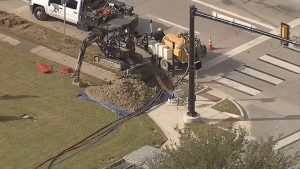
According to a recent analysis by the Environmental Integrity Project, a Washington, D.C.-based policy nonprofit, the United States is seeing a surge in pipeline development. The study, which examined public records from federal and state agencies as well as company disclosures, identified 193 new projects either proposed or under construction as of August 1.
Scale of the expansion
The report estimates that the nation will add roughly 17,000 miles of new pipeline capacity – the largest increase in almost two decades, a period that previously saw rapid growth due to hydraulic fracturing technology.
Of the 193 projects, 151 are slated to transport natural gas. Eighty‑one of those projects will cross more than 19,000 acres of federally protected wetlands.
Louisiana’s role
In Louisiana, the pipeline buildout is largely tied to the booming liquefied natural gas (LNG) export industry along the Gulf Coast. The most significant effort by export capacity is the Driftwood Line 200 and 300 project, which would run 71 miles from Beauregard Parish to Calcasieu Parish, cross 151 acres of wetlands, and deliver 5.7 billion cubic feet of natural gas per day to expanding LNG terminals.
Regulatory environment
The report highlights that 52 of the 193 projects have sought or received expedited reviews from federal agencies such as the Federal Energy Regulatory Commission and the Army Corps of Engineers. At least 30 % of the wetland‑impacting projects have obtained accelerated permits under the Trump administration’s energy emergency policy.
Enforcement actions against pipeline operators have also fallen sharply. The Federal Pipeline and Hazardous Materials Safety Administration recorded 112 enforcement actions last year, roughly half its two‑decade average of 217 and the lowest number on record.
Critics call for tighter oversight
Jen Duggan, executive director of the Environmental Integrity Project, warned that major pipeline projects threatening public safety and the environment need rigorous scrutiny, transparent public input, and comprehensive hearings. She argued that the reduction in safety rules and enforcement represents a serious concern and urged the Trump administration to strengthen safety regulations, increase inspections, and fund safety research.
While the report underscores the rapid growth of pipeline infrastructure and the easing of federal oversight, it also raises questions about the balance between energy development, environmental protection, and public safety.
Original reporting: KTBS 3 (Shreveport) — read the source article.