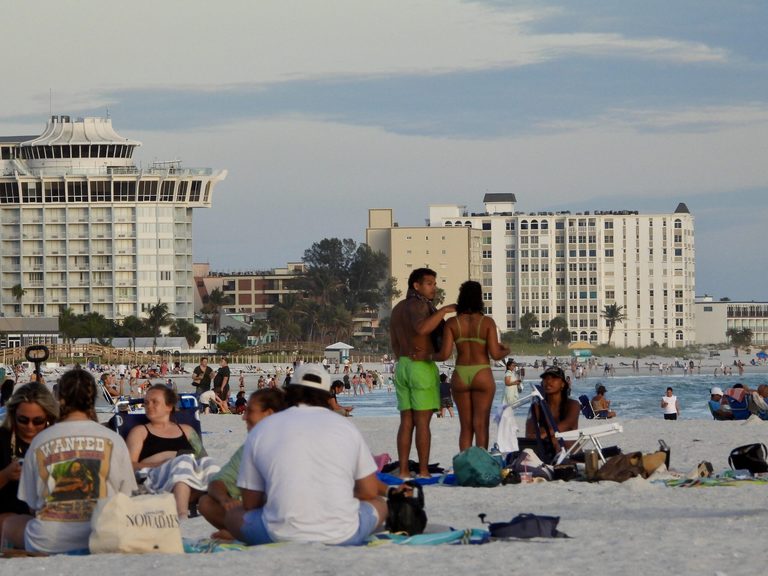
Pinellas County’s tourism engine is roaring. At the Tourist Development Council’s monthly meeting, Visit St. Pete‑Clearwater announced that the county collected a record $99.72 million in bed‑tax revenue for the fiscal year ending September 30, 2025. The surge reflects a 14.7% increase in hotel‑room revenue and a 27.7% jump in vacation‑rental earnings compared with September 2025.
Strong visitor numbers fuel growth
Eddie Kirsch, director of digital and data for Visit St. Pete‑Clearwater, said an estimated 16.1 million visitors spent at least 90 minutes in Pinellas County, a 9.7% rise over the prior year. Although overall visitation remains slightly below the 2024 peak—when hurricanes Helene and Milton had not yet struck the barrier islands—September’s average nightly hotel rate climbed to $156.08, the highest for that month since at least 2021.
Bed‑tax dollars support tourism and community projects
The 6% tourist development tax funds advertising, beach nourishment, cultural attractions and other state‑permitted expenditures. Visit St. Pete‑Clearwater is allocating roughly $3.37 million to 47 events through its Elite Event Funding Program, both record amounts for the initiative. Recent events have drawn more than 1 million attendees, including over 500,000 tourists, and the upcoming 2027 Ocean Race will give St. Petersburg its only North American stopover.
Local governments face property‑tax pressure
While tourism revenue soars, many Pinellas municipalities are bracing for significant property‑tax losses. St. Pete Beach expects to lose about $1 million in fiscal 2028 and more than $2.4 million the following year. In response, the city let its $242,000 annual contract with the Pinellas Suncoast Transit Authority (PSTA) expire on Dec. 31, opting to continue paying for paratransit services based on usage while PSTA decides the trolley’s fate.
Commissioner Karen Marriott, who represents barrier‑island communities on PSTA’s board, noted that many trolley riders are tourists or tourism‑industry workers. She suggested that the county consider using bed‑tax revenue to fund beach transportation, arguing that without the trolley, more cars could clog the islands’ roads. Commissioner Jon Maldonado echoed the idea and urged PSTA to approach beachfront resorts for possible contributions.
Legal backdrop for using bed taxes
The Florida Attorney General’s Office has previously weighed whether bed‑tax funds can support transit services. A 2013 opinion on Walton County allowed such use when attracting tourists was a primary purpose, while a 2017 clarification limited the scope to specific tourism‑related projects rather than general public‑transit operations.
Sports tourism adds another revenue stream
Caleb Peterson, director of the Visit St. Pete‑Clearwater Sports Commission, reported that meetings with 35 event organizers at a Birmingham trade show generated 11 promising leads for Pinellas County. Officials see sports tournaments as a way to offset maintenance costs for public athletic fields while driving business to local hotels, restaurants and shops.
Visit St. Pete‑Clearwater’s year‑end financial report shows $26.6 million spent on advertising and agency fees and nearly $7.4 million on beach nourishment, underscoring the county’s commitment to maintaining the attractions that draw visitors.
Amendment 3 and future fiscal outlook
The recent passage of Amendment 3 will raise Florida’s homestead exemption for non‑school property taxes to $150,000 in 2027 and $250,000 in 2028 for qualifying homeowners. While this reduces a major source of revenue for local governments, officials remain optimistic that robust tourism spending will help offset the shortfall.
Peterson summed up the sentiment: “We’re trying to figure out what the new normal is as we move forward with some of our municipal partners.” With record bed‑tax collections and a proactive approach to leveraging tourism dollars, Pinellas County aims to sustain its economic vitality even as property‑tax revenues shift.
Original reporting: St. Pete Catalyst — read the source article.