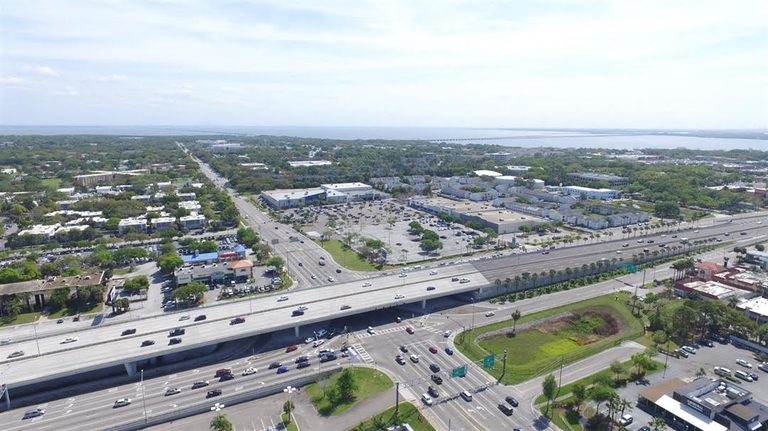
Pinellas County commissioners met Tuesday to address the long‑running reconstruction of U.S. 19, a key corridor that carries more than 100,000 vehicles daily through St. Petersburg and surrounding employment centers. After months of debate, the board approved a $10 million increase to an existing utility‑repair contract with QRC Inc., hoping to reduce further delays caused by water‑main relocations and other utility work.
Background on the U.S. 19 overhaul
The Florida Department of Transportation (FDOT) launched a $242.7 million overhaul of U.S. 19 in 2022, awarding the primary construction contract to Johnson Brothers Corporation. The project, which includes two new interchanges and frontage roads, was slated to finish in 2028. However, FDOT now lists a projected completion date of 2030, reflecting more than 800 days of delay.
County officials say a major water main that runs alongside the highway is a primary bottleneck. Utilities Director Jeremy Waugh explained that crews must relocate roughly one mile of a major water line before road work can resume in the affected segment. A leaking valve near Evans Road also requires attention, further complicating the schedule.
Commissioners’ vote and rationale
During the meeting, commissioners voted 4‑3 to approve the $10 million increase to the utility contract. The additional funds are intended to cover water‑main bypass operations, utility relocations, and related work tied to the highway reconstruction. Proponents argued that hiring QRC would give the county greater control over the utility portion of the project and help expedite completion.
Commissioner Kathleen Peters moved to approve the increase, with Commissioner Rene Flowers seconding the motion. Commissioner Vince Nowicki questioned the cost differences between QRC and Johnson Brothers, noting that the county had obtained pricing from QRC but had not yet negotiated a final price with Johnson Brothers through FDOT.
Johnson Brothers’ position
Johnson Brothers representative James Charles testified that the contractor has already identified six major issues contributing to delays, estimating associated costs at $20.7 million. He traced the first major setback to March 2025, when the company raised concerns about the water‑main restraint system. Revised plans did not arrive until more than five months later, with additional revisions in January 2026.
Charles also highlighted a drainage‑structure issue that took six months to receive a response from the county’s engineer. He urged the board to allow Johnson Brothers to continue under its existing contract rather than bringing in a new contractor, arguing that “taxpayers deserve a clear price comparison.” He noted that Johnson Brothers had priced the revised Evans Road work at approximately $2.64 million, compared with the county’s $4.5 million allocation for the U.S. 19 utility portion.
Potential financial impact
County staff warned that each week of further delay could generate claims of roughly $230,000 against the county. Waugh said his department is already negotiating about 70 claims related to the project and emphasized the need to begin utility work within 30 days to avoid additional setbacks.
If Johnson Brothers seeks compensation from FDOT for county‑caused delays, the state could pass those costs back to Pinellas County, further straining the local budget. Commissioners also considered the county’s ability to respond to water‑main breaks elsewhere; the existing QRC contract is nearing exhaustion, and without a higher spending limit, the county could lose a critical emergency‑repair resource.
Looking ahead
Commissioners indicated they might revisit the contract issue in December after further review. In the meantime, the county expects the Evans Road utility work and associated water‑main bypass to take six to eight months. Waugh reiterated that “everyone that lives up there wants this road done,” and pledged to keep the project moving while balancing the need for reliable water‑service throughout Pinellas County.
The U.S. 19 reconstruction will continue to affect motorists and businesses along the corridor for roughly four more years, with lane closures and shifting traffic patterns expected to persist until the project’s eventual completion.
Original reporting: St. Pete Catalyst — read the source article.