The Idaho State Tax Commission released a detailed data set on Friday that puts the state’s private school tax credit program under a microscope. The $50 million Parental Choice Tax Credit, created by House Bill 93 in 2025, was intended to give families who could not otherwise afford private education a way to broaden their options.
Supporters point to low‑income participation
Proponents highlight that roughly 45 % of credit recipients have household incomes at or below 300 % of the federal poverty level – about $99,000 for a family of four. The Mountain States Policy Center noted that 3,092 students, or 25.3 % of those awarded credits, had previously attended public schools, suggesting the program is moving children into alternative settings.
Mountain States also emphasized that the credits reached families in every one of Idaho’s 35 legislative districts, countering claims that rural areas lack private‑school options. “The data is even more surprising given that opponents claimed there were no choice options available in rural areas,” wrote Chris Cargill, the organization’s president, in a Sunday post defending the credit.
Opponents highlight concentration of funds
Critics, however, point to the uneven distribution of credit dollars. Residents of District 34 in Madison County collected just over $200,000, while those in District 20 around Meridian amassed close to $3.6 million. The pattern suggests that higher‑income, urban and suburban households are the primary beneficiaries.
Idaho Education Association President Peggy Hoy summed up the opposition: “Not one more cent of Idahoans’ hard‑earned tax dollars should go to vouchers. In fact, this failed experiment should be repealed.” The association argues that the program diverts resources from already underfunded public schools.
Fiscal context and legislative outlook
When HB 93 was enacted in 2025, the Legislature also increased general‑fund budgets for state agencies by $357 million, allocating $102.8 million to public schools. Governor Brad Little and the Legislature trimmed most agency budgets in 2026, leaving K‑12 largely untouched, and have asked agencies to hold spending requests steady for 2027.
State Superintendent Debbie Critchfield’s 2027‑28 budget request includes only a $20 million increase in discretionary K‑12 spending. Any proposal to raise the education tax credit by $25 million or $50 million would inevitably be weighed against these public‑school funding needs.
Political dynamics heading into 2027
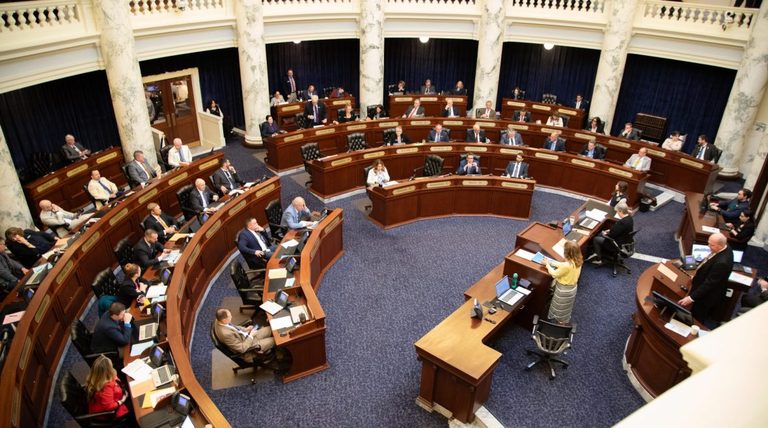
The original passage of HB 93 was narrow – the House approved it 42‑28 and the Senate 20‑15. The 2027 Legislature is expected to be more moderate, with centrists gaining ground in the May Republican primary and Democrats adding six seats in November. This shift could make expansion of the credit more difficult, even as Mountain States’ math shows that an additional $25 million could serve 6,100 more students and $50 million could serve 12,200.
While the Tax Commission’s data provide ammunition for both sides, the ultimate decision will hinge on whether Idaho’s lawmakers prioritize expanding school choice or protecting public‑school budgets in a tight fiscal environment.
Original reporting: Idaho Education News — read the source article.