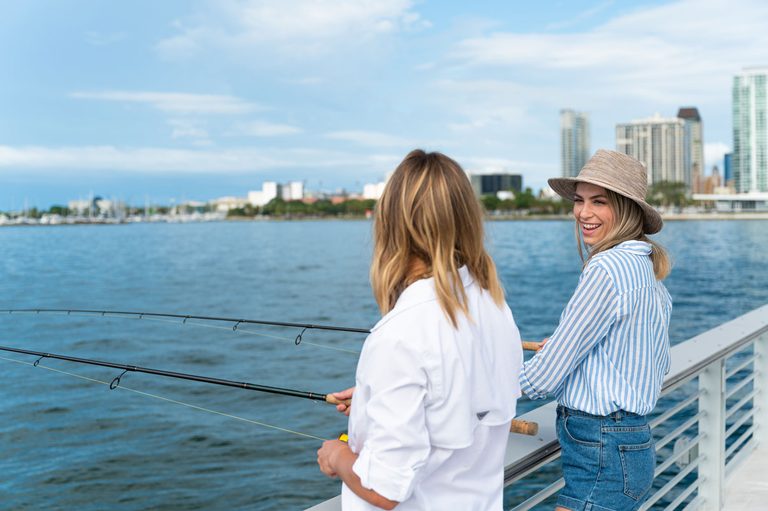
At the August 19 meeting of the Pinellas County Tourist Development Council (TDC), council member Capt. Dylan Hubbard urged officials to explore rebuilding the county’s historic fishing piers and other shore‑based access points that have vanished over the decades. Hubbard suggested that tourist development tax revenue could help finance such projects, though no vote or funding request was made at the meeting.
Why the piers matter
Pinellas once boasted a string of piers where anyone with a fishing rod could walk out over the water without owning a boat. Those structures have largely disappeared. Hubbard cited the Redington Long Pier, the former Indian Rocks Beach pier, fishing structures in Pass‑a‑Grille, and bridge catwalks as examples of lost access.
The loss stretches back decades. The Big Indian Rocks pier opened in 1959 and was destroyed by Hurricane Elena in 1985. The Redington Long Pier, built in 1962, survived until deterioration forced its closure and state demolition in 2020.
Safety Harbor’s recent success
Safety Harbor recently rebuilt its marina pier after hurricane damage, spending roughly $4 million using insurance proceeds, FEMA assistance, and city funds. Mayor Joe Ayoub said the decision to rebuild was never in doubt; the question was simply how quickly it could be completed. The pier now serves walkers, dog owners, early‑morning exercisers and photographers, creating a “community within a community,” according to Ayoub.
Community impact
Hubbard emphasized that piers once served as entry points for future charter captains. He recalled the late Capt. Dave Mistretta, a local legend who began his career fishing from a pier. Hubbard noted that a child could ride a bicycle to a pier, learn to fish, and eventually move on to kayaks, party boats, or charter work.
Beyond anglers, piers attract sightseers and casual walkers. Hubbard remembered the former John’s Pass jetty, where “nine out of ten people weren’t fishing” but were simply enjoying the waterfront.
Funding considerations
The TDC’s tourism plan allows a portion of tourist development tax dollars to fund publicly owned tourism‑related facilities. In January, county commissioners expanded the plan to include publicly owned beach park facilities that qualify as tourist attractions. Whether a rebuilt fishing pier would meet that definition remains undecided.
Hubbard also floated the idea of private‑operator models, where anglers could pay a fee to fish from a licensed portion of a pier, citing Pier 60 and the Skyway fishing piers as existing revenue‑generating examples.
Legislative backdrop
During the same meeting, Commissioner Chris Latvala mentioned a possible amendment to the state constitution that could give counties more flexibility in using tourist development tax funds if voters approve Amendment 3, a proposed property‑tax overhaul.
Tourism tax collections are currently running ahead of the previous fiscal year, according to county tax records, providing a favorable fiscal environment for new projects.
Next steps
At present, no specific pier project has been approved, no locations have been selected, and no funding request has been submitted to the Board of County Commissioners. Hubbard said his goal is to start a conversation and determine whether a feasibility study makes sense.
If the county moves forward, the rebuilt piers could restore a sense of community, provide low‑cost recreation for families, and honor the county’s maritime heritage.
Original reporting: St. Pete Catalyst — read the source article.