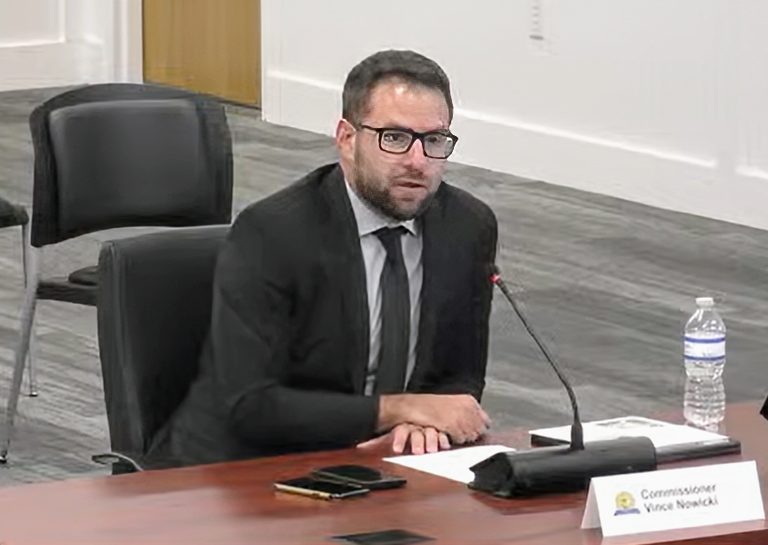
Pinellas County Commissioner Vince Nowicki, who also sits on the governing board of the Pinellas Suncoast Transit Authority (PSTA), sent a formal letter to CEO Brad Miller demanding the removal of a Facebook post that warned voters Amendment 3 could slash the agency’s operating budget by 25 percent. Nowicki argued the post crossed the line from informing the public to campaigning against the property‑tax measure, a violation of Florida Statute 106.113(2).
Legal concerns raised
In a September 30 email obtained by the St. Pete Catalyst, Nowicki wrote, “I believe PSTA has used public resources to influence voters against Amendment 3 in violation of section 106.113(2), Florida Statutes.” He requested that the agency preserve all records related to the post, identify who created and approved the material, and disclose how much staff time and public money were spent on the effort. He gave the agency until 5 p.m. Friday to respond and warned he would file a sworn complaint with the Florida Elections Commission if the request was ignored.
PSTA’s response
PSTA’s interim communications manager, Amanda Boisen, said the agency takes Nowicki’s concerns seriously and is committed to following Florida election law. “Our intent has always been to provide factual information about our budget and services,” the statement read. The agency said it has referred the letter to legal counsel, is preserving the requested records, and will answer the public‑records request.
The transit authority noted that board members had requested information about Amendment 3 in June, and staff presented findings at public meetings in August. PSTA did not confirm whether the board formally approved the social‑media campaign.
What the warning said
The removed Facebook graphic warned that a passage of Amendment 3 could cost PSTA roughly a quarter of its operating budget. It listed specific bus routes, trolley and ferry services, and transportation programs for people with disabilities that could be eliminated or dramatically reduced.
Nowicki emphasized that the graphic presented a “hypothetical story” and that no board action had been taken to cut services even if the amendment passed. “Government growing too quickly is the problem,” he said in a Thursday interview, adding that the agency should explore other ways to address a potential shortfall, such as reviewing administrative costs, employee benefits, and possible furloughs before considering layoffs or route eliminations.
Financial backdrop
Property taxes make up about 69 percent of PSTA’s operating budget. Chief Financial Officer Debbie Leous projected a $34 million funding gap for fiscal 2029 if the property‑tax revenue were reduced, based on a preliminary scenario developed in August. Under that scenario, roughly 25 of the agency’s 40 bus routes could disappear, up to 120 jobs could be lost, and ferry, trolley, and disability‑transport services would be vulnerable.
Leous said that even aggressive administrative reductions would only cover about half of the projected shortfall, leaving substantial cuts to transit service unavoidable without additional revenue.
Broader context
Amendment 3 would raise Florida’s homestead exemption for non‑school property taxes to $150,000 in 2027 and $250,000 in 2028, a change supporters say will lower homeowners’ tax bills. Local governments, however, warn that the reduced revenue could strain public services, including transit.
The dispute mirrors similar challenges in other Florida jurisdictions. State Rep. Berny Jacques recently contested links critical of the amendment on the City of Seminole’s website, and Largo officials faced comparable criticism. In Pinellas, the debate is heightened because a board member of the agency itself is questioning the legality of its voter‑information efforts.
Next steps
Nowicki’s letter requests detailed records on who developed the campaign, whether attorneys reviewed it, and the amount of public money spent. He has indicated readiness to file a formal complaint with the Florida Elections Commission if the agency does not comply.
Florida law does allow factual information to be posted on government websites and permits impartial reporting of official actions, but it restricts the use of public funds for communications that could be seen as influencing a ballot measure. Whether PSTA’s Facebook post crossed that line remains to be determined.
Original reporting: St. Pete Catalyst — read the source article.