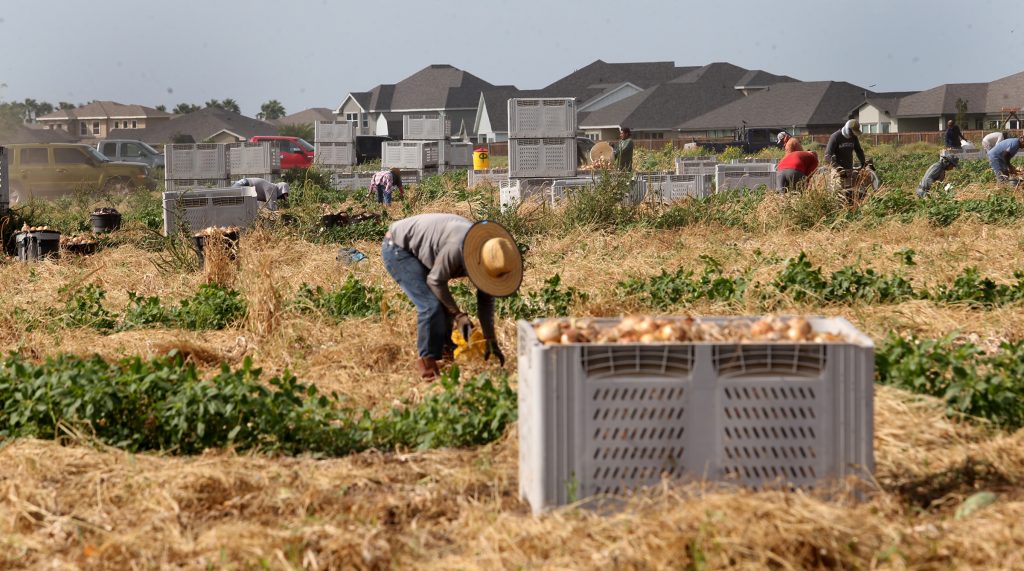
In the heart of Texas’ Rio Grande Valley, residents and farmworkers are facing increased health risks due to pesticide exposure. This region, known for its agricultural productivity, is seeing a troubling link between pesticide use and Parkinson’s disease, a progressive neurological disorder.
Kelsey Baker, a neuroscientist at the University of Texas Rio Grande Valley, has observed a high prevalence of Parkinson’s among locals. Her research indicates that environmental factors, particularly pesticide exposure, are significant contributors to the disease. This aligns with broader studies showing that over 80% of Parkinson’s cases are environmentally driven rather than genetically linked.
Farmworkers, who are directly exposed to pesticides in the fields, are at heightened risk. However, residents like Baker, who live near these farms, are also vulnerable. The U.S. Environmental Protection Agency’s analysis of paraquat, a pesticide strongly linked to Parkinson’s, suggests that it can affect individuals within a 20-square mile radius of its application.
Local Stories Highlight the Impact
Leo Armando Ramirez, Sr., a former educator from Mission, Texas, exemplifies the personal toll of this exposure. Diagnosed with Parkinson’s in 2022, Ramirez’s condition reflects both genetic and environmental influences. His family, historically involved in local agriculture, was frequently exposed to pesticides, including DDT and paraquat, known contributors to the disease.
Ramirez’s story is not unique. Many in the Valley, including undocumented workers and those without health insurance, face similar challenges, complicating efforts to track and address the disease’s prevalence.
Efforts to understand and mitigate these risks are ongoing. Baker’s research aims to distinguish the neurological impacts of pesticide exposure, while advocates like Dr. Ray Dorsey emphasize the preventable nature of this suffering, drawing parallels to historical public health battles against smoking.
As the fastest-growing neurological disorder globally, Parkinson’s disease poses a significant challenge to communities like those in the Rio Grande Valley. Addressing environmental contributors such as pesticide exposure is crucial in safeguarding public health and ensuring the well-being of future generations.
Original reporting: El Paso News (HLL/CB) — read the source article.