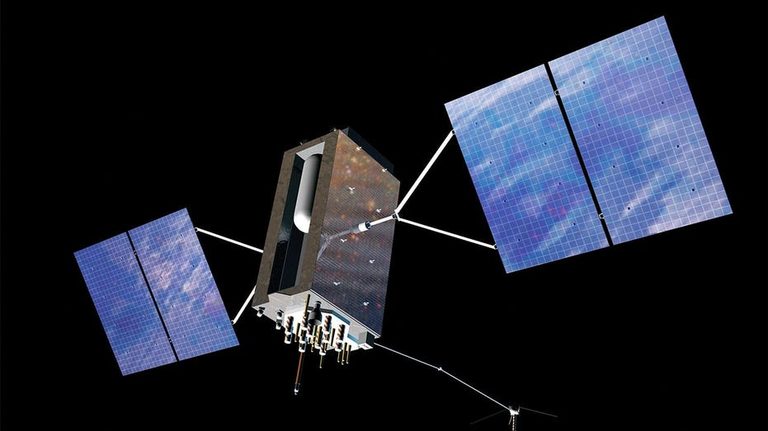
In a rare public admission, Air Force Secretary Troy Meink announced that the U.S. Space Force now operates “on‑orbit space control weapons” capable of defending the joint force against hostile adversary action. Speaking at the Air & Space Forces Association’s conference in National Harbor, Maryland, Meink emphasized the need to protect American forces operating in the increasingly contested space domain.
Why the Disclosure Matters
The statement marks a shift from the Pentagon’s long‑standing policy of keeping space‑based weaponry under wraps. As China and Russia accelerate their own counter‑space programs, the administration believes transparency can bolster deterrence while still safeguarding operational secrets.
Administration’s Rationale
Meink explained that the language used was “very well thought out” to avoid giving potential foes a detailed roadmap while still sending a clear message: the United States is prepared to defend its satellites and the critical services they provide. He declined to specify whether the systems are kinetic—such as missiles or projectiles—or non‑kinetic, like jammers or directed‑energy devices, noting that both options could offer a strategic advantage by reducing warning time for an adversary.
Expert Insight
Clayton Swope, deputy director of the Aerospace Security Project at the Center for Strategic and International Studies, called the revelation “exceptional” and “newsworthy,” noting that the United States has never publicly discussed space weapons in this way before. He said the capabilities could range from kinetic interceptors that physically destroy a target to non‑kinetic tools that jam or spoof satellite communications.
According to Swope, the speed and surprise afforded by weapons already positioned in orbit could compress an attack window from “dozens of minutes” to “mere minutes,” giving the United States a decisive asymmetric edge in any future conflict.
Strategic Context
Modern U.S. military operations rely heavily on space‑based systems for communications, navigation, intelligence, missile warning, and targeting. Disrupting or destroying these assets would cripple joint operations. By fielding space‑control weapons, the administration aims to ensure that adversaries cannot deny the United States access to space, preserving the freedom of action that underpins American security.
China and Russia have both demonstrated capabilities to jam, spoof, or even physically target satellites. Swope warned that while cyber‑attacks and jamming may fall below the threshold for a major military response, a kinetic strike on a satellite would represent a significant escalation.
What Remains Unknown
The Pentagon has not released details about the specific platforms, testing status, or deployment timeline of these systems. The Space Force did not respond to requests for further comment. Observers note that most satellites appear indistinguishable from ordinary communications or imaging platforms, making it difficult for the public to identify which objects may house defensive capabilities.
Nevertheless, the administration’s decision to acknowledge the existence of these weapons underscores a broader strategy: maintain a credible deterrent, protect vital national security assets, and ensure that the United States retains its strategic advantage in the final frontier.
Original reporting: Fox News (HLL/CB) — read the source article.