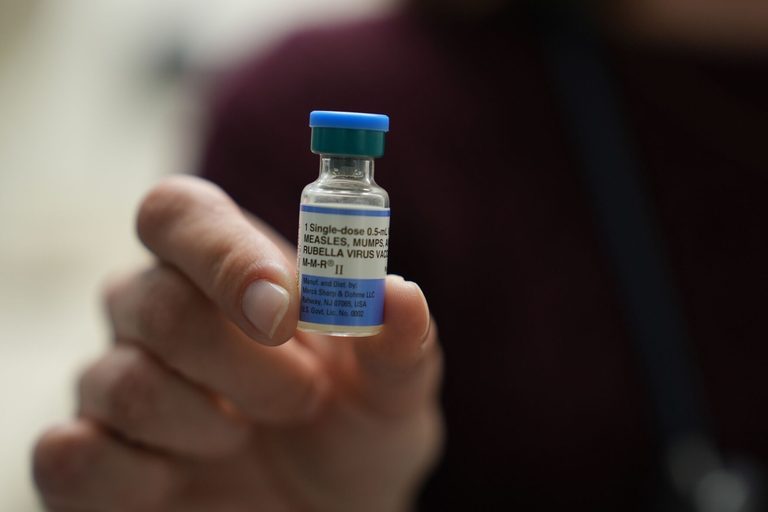
In Pennsylvania, the first measles‑related deaths in decades have ignited a heated debate between state officials and a federal health appointee. Governor Josh Shapiro, a Democrat, emphasized that both victims were unvaccinated and that higher immunization coverage could have prevented the fatalities. The governor’s call for stronger vaccination efforts comes as the state grapples with a recent surge in measles cases.
Political backlash from the Trump administration
U.S. Health Secretary Robert F. Kennedy Jr., appointed by the Trump administration and known for his criticism of established vaccines, responded on social media by suggesting the deaths “may even have been altogether fabricated.” Kennedy’s remarks echo previous statements in which he cast doubt on measles‑related mortality, including a 2025 incident that recorded three deaths.
Medical community stresses public‑health focus
Infectious‑disease experts warned that the controversy is diverting attention from a growing public‑health threat. Dr. Amesh Adalja, a senior scholar at the Johns Hopkins Center for Health Security, said the discussion has become “political” rather than a search for answers. The Centers for Disease Control and Prevention has not yet updated its national measles tally, and the delay raises concerns about transparency.
Understanding measles deaths
The United States eliminated endemic measles transmission in 2000 by maintaining vaccination rates above the 95 % threshold needed for herd immunity. Recent declines in coverage have allowed outbreaks to reappear, prompting international health officials to consider whether the U.S. and Mexico have lost their measles‑free status.
Defining a measles death is complex. The World Health Organization counts a death when a person tests positive for measles and dies within a month of rash onset, provided no other obvious cause—such as trauma—is identified. State health departments are responsible for reporting both cases and associated deaths.
Local investigation of the two fatalities
Both deceased individuals were unvaccinated. One case involved a newborn boy in Lancaster County who died on August 14. The county coroner, Dr. Stephen Diamantoni, confirmed measles infection in the infant’s lung tissue but noted the absence of typical measles‑related organ damage. The cause of death was attributed to a torn spleen, and the coroner stated the virus did not directly cause the infant’s death.
The second death remains under investigation, with the Pennsylvania Department of Health initially refusing to release details. The department reiterated its criteria for a measles‑related death: the person must have had measles and must have died.
Calls for increased vaccination
Vaccine researcher Dr. Paul Offit warned that two measles‑related deaths in a county reporting roughly 400 cases is unusually high. He suggested many infections may be going unreported and emphasized the risk as schoolchildren return to classrooms. Offit urged a rapid expansion of vaccination efforts to avert a potential disaster.
Experts demand political restraint
Dr. Adalja criticized the premature politicization of the deaths, urging officials to keep the debate out of the political arena and focus on clear, science‑based communication. He argued that public‑health officials, not politicians, should lead the response.
The episode underscores the tension between state leadership advocating for mandatory immunizations and federal voices questioning vaccine safety. As measles cases climb nationwide, Pennsylvania’s experience may become a bellwether for how the country balances individual liberty, parental rights, and community health.
Original reporting: KTBS 3 (Shreveport) — read the source article.