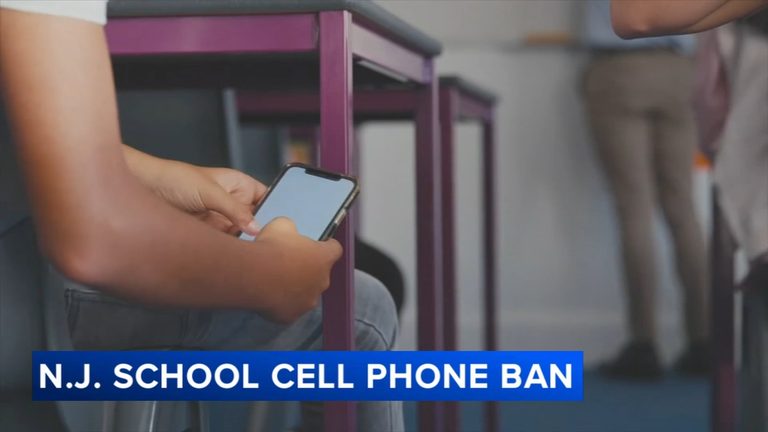
In Pennsauken, New Jersey, the school district is preparing for the first day of classes under a new state mandate that bars personal cell phones and smartwatches for non‑educational use from the opening bell to the end of the school day. The law, which applies to every public school in the Garden State, requires districts to adopt policies that keep devices powered off and secured for the entire instructional period.
Local implementation
Superintendent Dr. James Bevere explained that Pennsauken schools have already used magnetic locking pouches for middle‑school and some high‑school students. This year the district will expand the requirement so that all high‑school students must store their phones in the pouches for the full day. Teachers at Pennsauken High School have been setting up classrooms while adjusting to the updated rules.
“Students were more worried about texting friends or their boyfriend/girlfriend than paying attention in class,” said Rhonda Chilakos, a Pennsauken High School teacher. Educators believe the reduced phone access will help students focus on instruction and rebuild social skills that have eroded with constant device use.
Why the law matters to families
Dr. Bevere noted that the surge in personal device use has led to a decline in hallway conversations and face‑to‑face interaction among students. “I’ve seen the eroding of social skills,” he said. The superintendent also warned that parents may need to adjust expectations, noting that many families are accustomed to instant communication with their children.
“A lot of parents are caught on this instant gratification. I want my kid to text me and say they know how to get to their grandmother’s house,” Bevere said. He reassured families that they can still reach students during the day by contacting the school office.
Community response
While many parents support the effort to limit distractions, some have voiced concerns about the loss of phone access during lunch. Jacob Howe, a student at Moorestown High School, said, “I use my phone at lunch to study, but we can’t even have it at lunch anymore.” His mother, Kristi Howe, agreed that limiting phone use in classrooms is beneficial but questioned the restriction during lunch periods, noting that students already spend a great deal of time on computers.
The state guidelines do allow exceptions when a teacher supervises device use for instructional purposes, as well as for medical needs or translation services. Districts may choose how to enforce the rule, whether by having teachers collect devices each morning or by requiring students to store phones in lockers.
Broader context
New Jersey joins a growing list of states that have enacted bans on personal devices during school hours for grades K‑12. Proponents argue that the measures protect students’ attention, promote healthier social interaction, and uphold parental rights to guide their children’s use of technology.
As the new school year begins, Pennsauken officials will monitor how the policy impacts academic performance and student behavior, with the hope that reduced screen time will foster a more focused and socially engaged learning environment.
Original reporting: Allentown News – 6abc Philadelphia — read the source article.