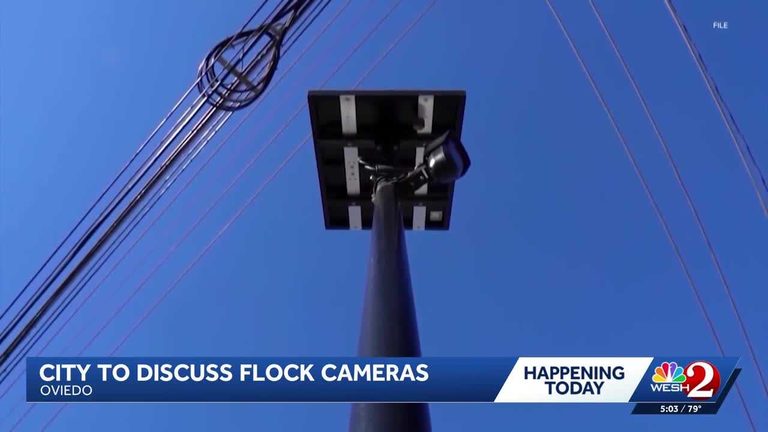
At the Oviedo City Council meeting scheduled for 6:30 p.m. Monday, the city’s use of Flock automated license‑plate reader (ALPR) cameras will be the primary agenda item. The technology, already installed throughout Seminole County and in municipalities across the United States, allows law‑enforcement officers to capture an image of a vehicle’s rear plate and run it through an algorithm that identifies the registration number.
Police chief outlines safeguards
Police Chief Dale Coleman told council members that the department has built‑in safeguards to protect residents’ constitutional rights. Officers must enter a case number before querying the system, and the police chief said the department conducts weekly audits of all searches to ensure proper use.
“I do believe that it’s good technology that can be used effectively without violating anyone’s rights,” Coleman said. He added that agencies that discover improper use typically take “drastic actions,” including termination and filing charges against the offending officer.
Benefits cited by law‑enforcement
According to Chief Coleman, the cameras have already helped locate stolen vehicles and assist investigations of other crimes. He emphasized that the devices are stationary, capture only the width of a lane, and do not track moving individuals. The system does not employ facial‑recognition software, and alerts are generated only for specific criminal activity, not for routine violations such as an expired registration.
“It’s a very useful tool for law enforcement,” Coleman said. “If you live in the city of Oviedo, feel free to ask us questions. I think law enforcement will answer any questions or concerns.”
Council members voice privacy worries
During a prior meeting, several council members raised concerns about the potential for misuse and the broader implications for privacy. While the chief assured that a human must verify any plate match before action is taken, some elected officials asked for additional transparency measures, including public reporting of the number of searches conducted each month.
The council’s discussion will determine whether any policy adjustments are needed, such as stricter audit procedures, clearer public‑notice requirements, or limits on the types of offenses that trigger alerts.
What residents can expect
Oviedo residents who have questions about the ALPR program are encouraged to attend the council meeting or contact the police department directly. The city has indicated that it will provide answers to any inquiries and will consider community feedback when finalizing its stance on the technology.
As the debate continues, Oviedo joins a growing number of Florida municipalities grappling with how to balance modern policing tools with the constitutional protections afforded to citizens.
Original reporting: WESH Orlando — read the source article.