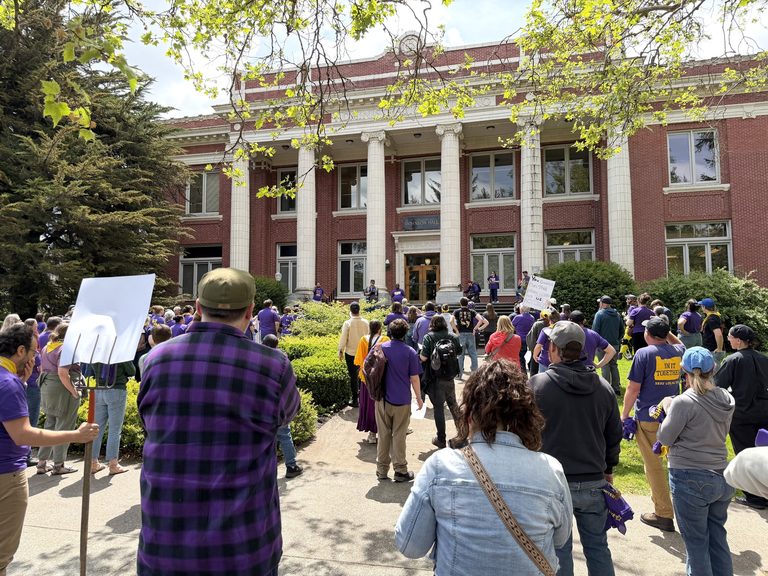
Classified employees at Oregon’s public universities have taken a decisive step toward a work stoppage. On Sept. 17, members of Service Employees International Union Local 503 voted 97% to strike beginning Sept. 28, the first day of classes for undergraduates at the University of Oregon.
Union demands and university offers
The union, representing roughly 1,800 staff at the University of Oregon and about 4,600 classified workers across the state’s seven public campuses, is pressing for a 3% wage increase in both 2026 and 2027. The university system’s current proposal offers a 1.5% base wage adjustment for 2026 and a 1% increase for 2027.
Beyond wages, SEIU 503 is fighting proposals to pause the 4.62% step‑increase schedule—seniority‑based salary hikes—from July 1, 2027 through June 30, 2028. The union wants the step increases to continue uninterrupted through June 30, 2028. University officials argue the one‑year pause would save more than $12 million in fiscal year 2027 while preserving the longer‑term step structure.
Health benefits and longevity premium
Both sides agree to maintain employer contributions to health insurance premiums at roughly 95%–97% of employee costs, but the university plan extends that arrangement through June 30, 2030, whereas the union seeks an earlier end date of June 30, 2028.
The union also proposes raising the 2.5% longevity premium—a bonus based on years of service—by a half‑percentage point every five years after eligibility, while the university would keep the premium flat.
Contract language and contracting concerns
SEIU 503 is alarmed by university attempts to remove “essential articles” from the contract, including layoff protections and a requirement that the administration conduct a feasibility study before outsourcing work. Union president Jennifer Smith warned that eliminating these safeguards could allow the universities to replace staff with contractors for “slapdash work.”
Human impact
Rieley Umphress, a UO catering sales coordinator and union bargaining delegate, highlighted the personal toll on workers: many must hold two jobs and rely on SNAP benefits to support their families. If the strike proceeds, the 5,000 first‑year UO students could be limited to a single dining hall staffed only by managers.
Union leaders say they will deliver the legally required 10‑day notice on Friday and hope the strike will be brief, urging the universities to reach a settlement before the work stoppage begins.
University response
The universities’ bargaining team emphasized responsible cost management, noting the projected $12 million cost of step increases in FY 2027 and the need for fiscal prudence. They have not yet commented further on the strike vote.
This labor dispute underscores the broader challenges facing higher‑education institutions in Oregon as they balance budget constraints with the cost‑of‑living pressures confronting their workforce.
Original reporting: Homepage – Lookout Eugene-Springfield — read the source article.