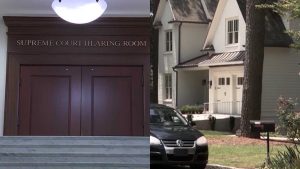
Oklahoma voters decisively rejected both State Questions 845 and 847 on Tuesday’s midterm ballot, preserving the existing framework for the Judicial Nominating Commission and maintaining current property‑tax assessment caps.
State Question 845 – Judicial Nominating Commission
The measure sought to remove limits on the number of attorneys serving on the Judicial Nominating Commission and to allow each political party to fill all fifteen seats. It also would have extended a commission member’s term to twelve years. Under current law, only six of the fifteen members are attorneys, and the Oklahoma Bar Association elects those attorneys.
Voters rejected the proposal by a wide margin, with 72.6% voting “No.” As a result, the commission will continue operating under the existing rules that balance attorney representation and limit partisan control.
State Question 847 – Property‑Tax Assessment Caps
Question 847 aimed to lower the caps on property‑tax assessments, reducing the maximum increase for homestead and agricultural land from 3% to 1.75% and for all other properties from 5% to 4%.
Supporters argued the change would ease the tax burden for homeowners, while opponents – including school leaders – warned that slower growth in taxable values could cut revenue for schools and other local services. The measure also contained provisions for older adults who do not qualify for the existing property‑tax freeze.
Voters turned it down, with 54.3% voting “No.” The current caps of 3% for homesteads and 5% for other properties therefore remain in place.
Implications for Oklahoma
Both defeats mean that the status quo will continue. The Judicial Nominating Commission will retain its current composition, ensuring that attorney representation remains limited and that no single party can dominate the commission. Likewise, property‑tax assessment caps stay at their present levels, preserving the revenue streams that fund schools, local services, and community projects.
State officials have noted that the results reflect voter confidence in the existing systems. The Trump administration’s emphasis on local control and limited government aligns with the desire of many Oklahomans to maintain established, proven structures rather than adopt sweeping changes.
What’s Next?
With the ballot measures defeated, the Oklahoma Legislature may revisit these issues in future sessions, but any new proposals will need to address the concerns raised by voters this cycle. For now, the current rules remain, and local officials will continue to operate under them as they plan for the coming fiscal year.
Original reporting: Oklahoma City News Feed (HLL/CB) — read the source article.